Primis Domain Management Hub (SSP Dashboard)
Company
Primis Video Discovery
Product
Configurations Platform
Year
2025
Feature
SSPs Domain Management Hub
Role
Sole Product Designer
The Problem
Primis runs monetization for thousands of domains across multiple SSPs. Domain work lived in spreadsheets and disconnected tools: no clear view of which domains were approved, serving, or broken, and configuration was error-prone in an environment where mistakes cost revenue.
The tool’s main user was the CEO, working alongside the internal ops team. That set the bar: fast scanning, decisions over data entry, and no tolerance for friction.
Impact
- Domain configuration time dropped 20% (Mixpanel).
- User errors in configuration-heavy flows dropped 12% (Mixpanel).
What I learned
I interviewed and shadowed the CEO and the ops team, then tested early prototypes with people managing hundreds to thousands of domains. Three findings shaped the design:
- They lived in spreadsheets. A new interface had to feel familiar, or it wouldn’t be adopted.
- Status alone didn’t matter. Mismatches did. That’s where revenue leaked.
- They had the data but couldn’t act on it safely. Visibility wasn’t the gap. Safe action was.
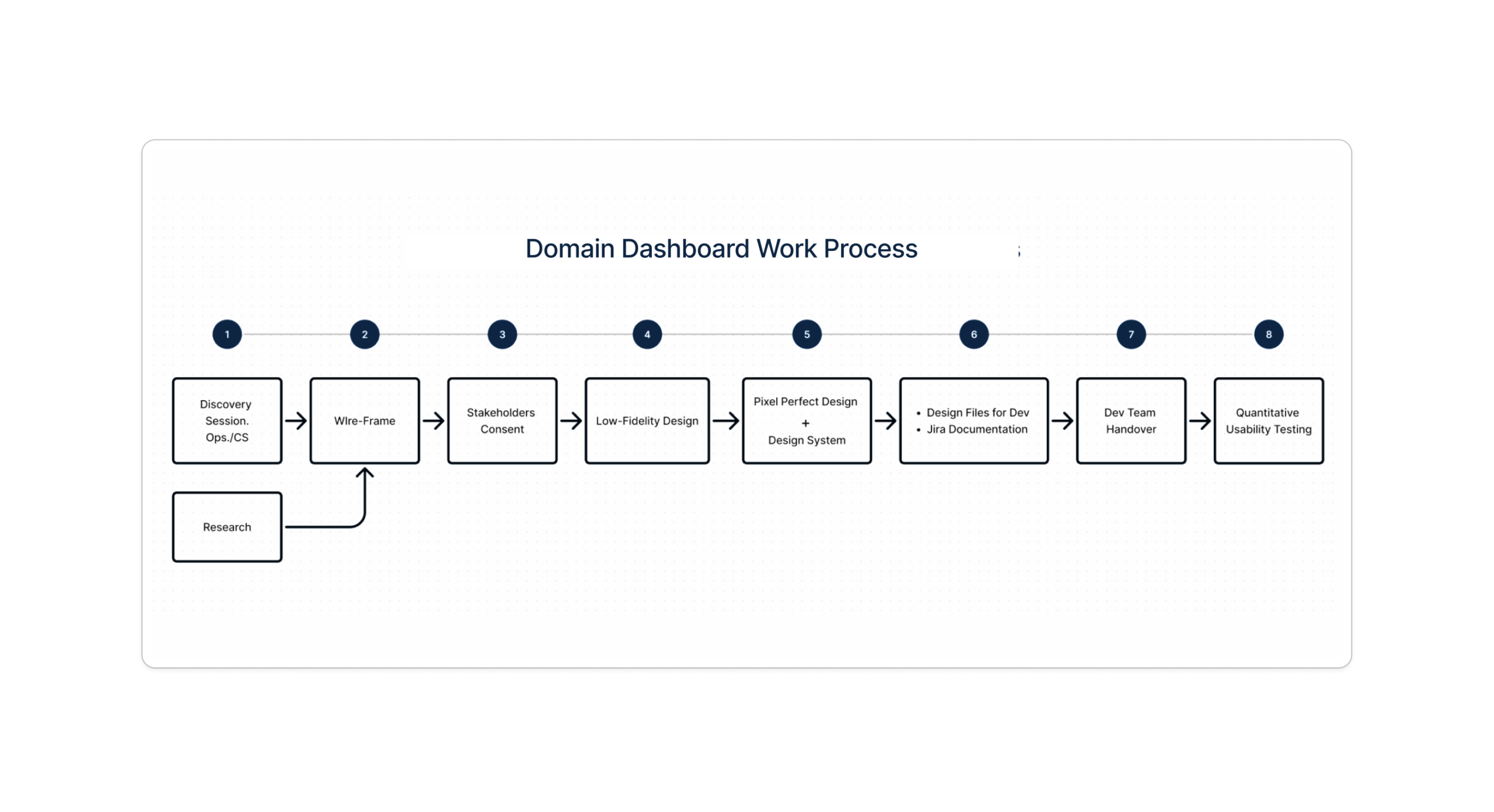
The Work Process
Key Decisions
Build on spreadsheet habits instead of replacing them.
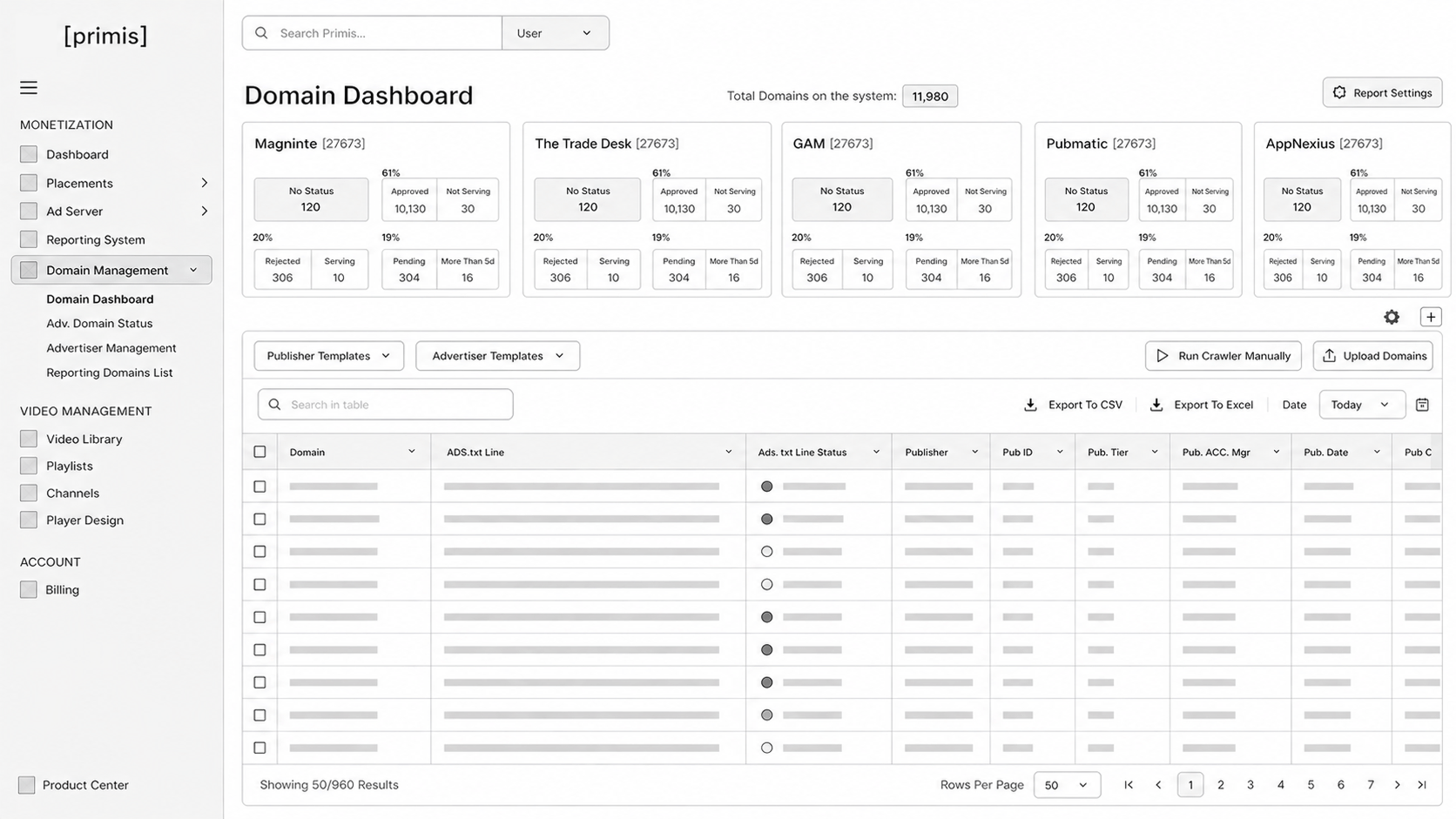
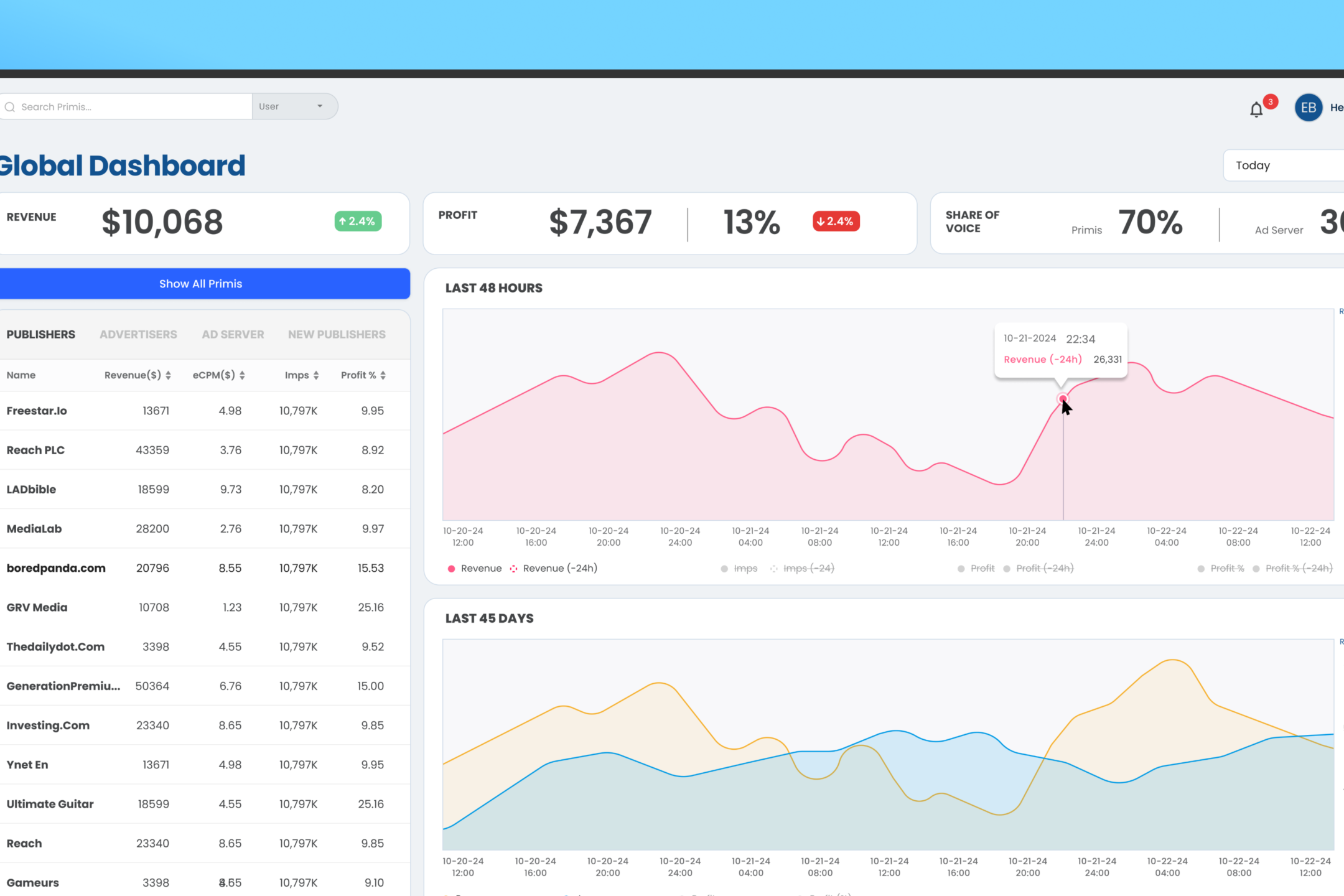
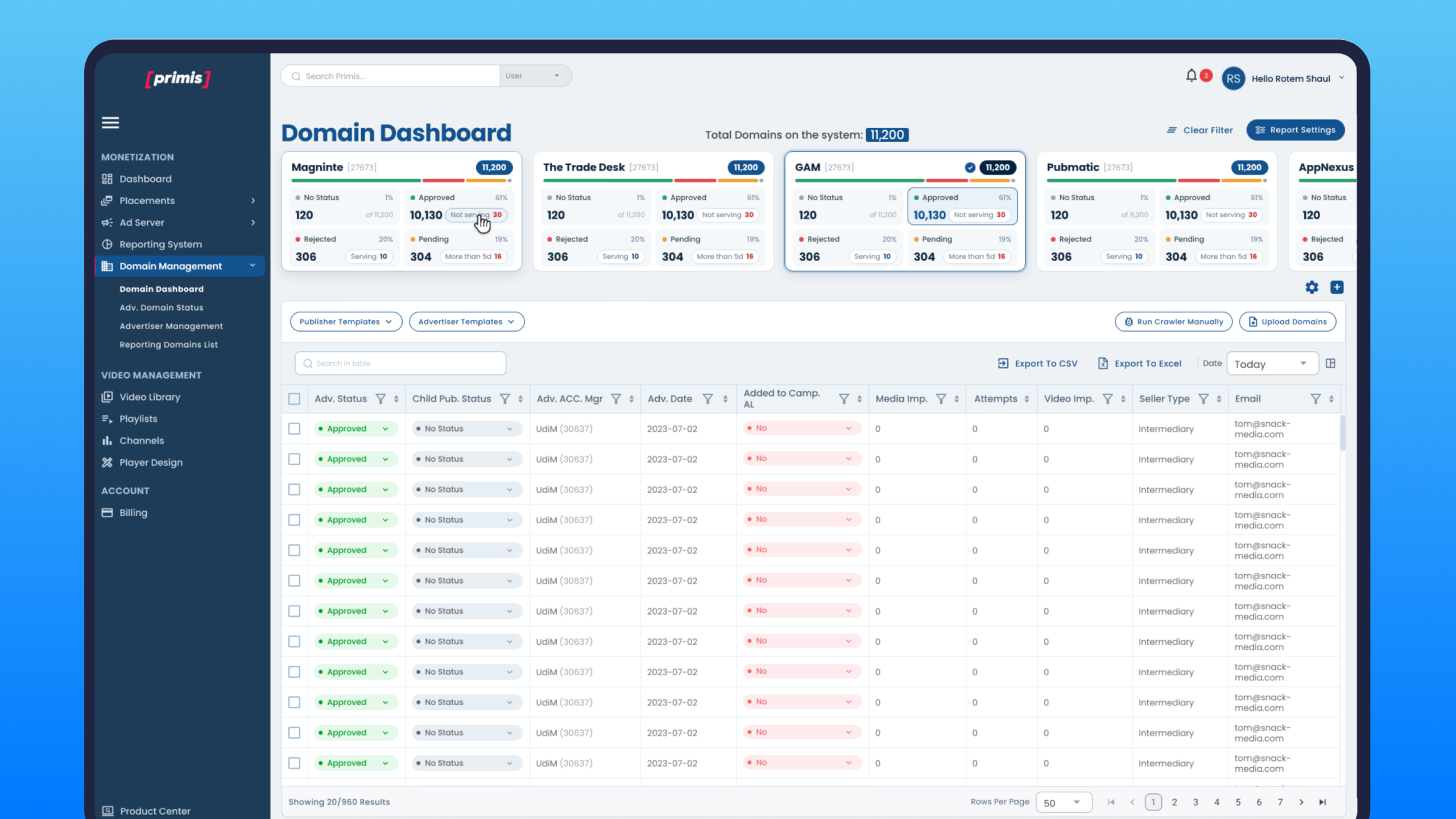
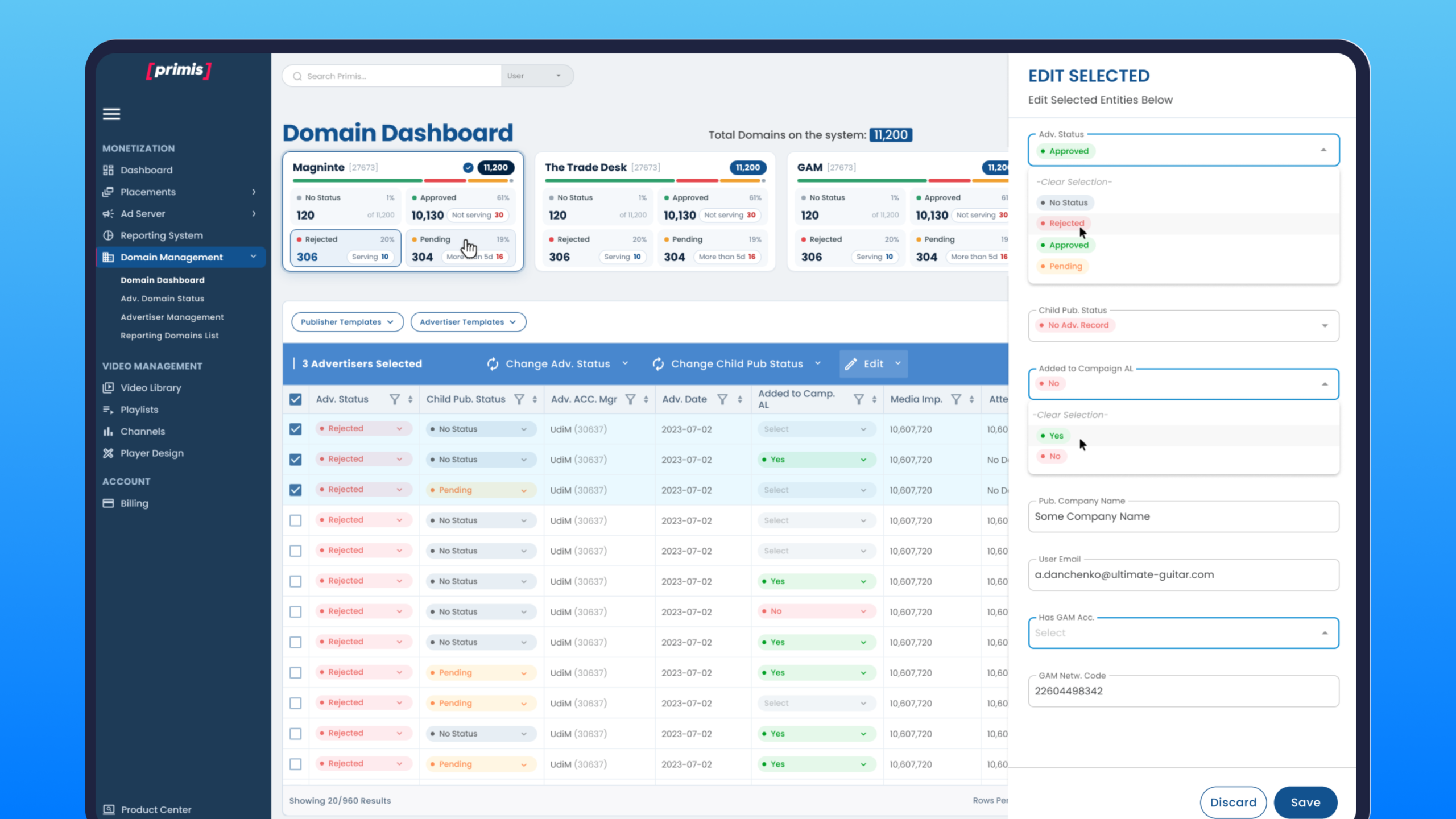
The dashboard is a searchable, filterable table with inline editing, bulk changes, and import from CSV or Google Sheets. I chose familiarity over a more novel interface so the CEO and ops team could adopt it without a learning curve.
Filter by problem, not by field.
My first design put SSP cards at the top of the page and filtered the table by SSP and by status (No status, Approved, Pending, Rejected). In a review with the CEO, it became clear that nobody acts on a status alone. What makes someone stop and check a domain is a mismatch: rejected but still serving, approved but not serving, or pending for more than 5 days. So I split the jobs. The SSP cards stayed as a live overview, where users choose which SSPs to show and in what order, and the filters were rebuilt around those red flags, per SSP. A problem domain now surfaces in one click.
Validations and feedback.
Bulk and single edits include validation and clear feedback. Approvals and bulk edits are permission-gated and auditable, and changes sync across the system immediately so everyone works from the current status.
Domain Dashboard - Ideation Wire-Frame