MarkeTrade Agentic Project
An end-to-end experiment in autonomous product creation, where an AI agent transformed a high-level goal into a working application with minimal human guidance.
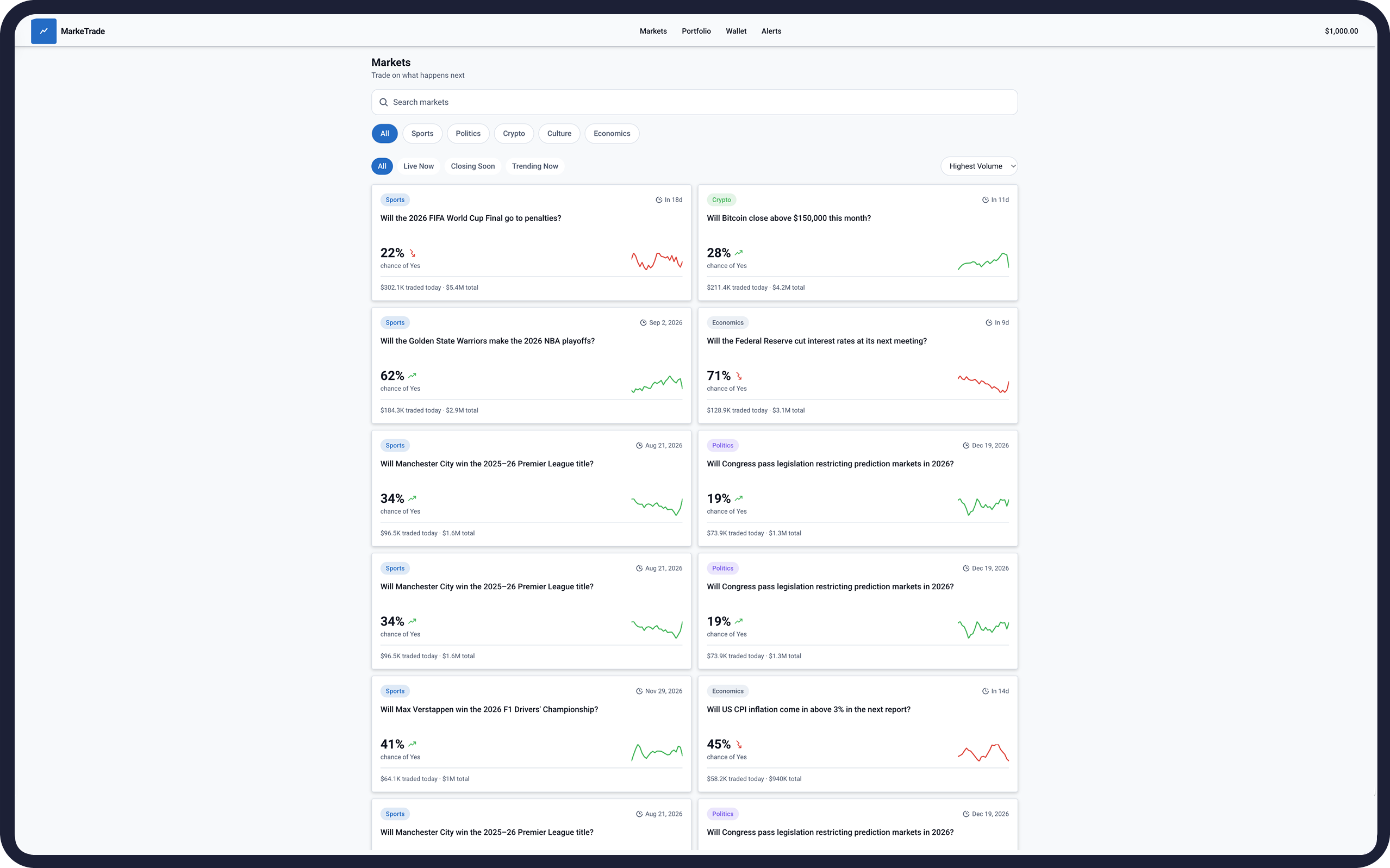
For this project, a different workflow was intentionally adopted to evaluate the capabilities of an AI agent operating with a high degree of autonomy. The entire process was carried out in Visual Studio Code using the Claude Code extension, allowing the agent to research, plan, write code, and iteratively modify the project directly within the development environment. Rather than guiding the process step by step, the agent was provided only with a high-level objective and a set of workflow instructions, without detailed product requirements, design guidelines, a design system, or a predefined visual style. From there, the agent independently researched the market, analyzed competitors, identified common design patterns, created a Product Requirements Document (PRD), made product and UX decisions, designed the interface, and developed the application end-to-end. Throughout the process, it also demonstrated awareness of common product and compliance considerations by proactively introducing features such as account verification and authentication flows, despite these requirements never being explicitly specified.
Compared to the previous project, where each stage was carefully guided and validated, this autonomous approach reached a functional first version more quickly, but with several noticeable compromises. The agent simplified key aspects of the product, omitted features such as advanced filtering and sorting, implemented a more basic interaction model, and overlooked responsive layout and flex behavior best practices across desktop and mobile. It also designed the trading cards as fully clickable components without dedicated Yes/No call-to-action buttons. While this resulted in a cleaner visual design, it lacked a strong visual cue to draw users’ attention to the primary action, making the interaction less discoverable.
Following the initial implementation, the project underwent 6-7 additional review and refinement iterations. These iterations focused on completing missing functionality, improving interaction patterns, strengthening responsive behavior, and refining the overall user experience to meet production-quality expectations. The experiment demonstrated that an agentic workflow can significantly reduce the effort required to move from an idea to a functional prototype by autonomously handling research, planning, design, and development. However, it also highlighted that, in its current state, such a workflow still relies heavily on human expertise, critical review, and iterative refinement to transform an initial implementation into a polished, production-ready product.
View Live Project Online >