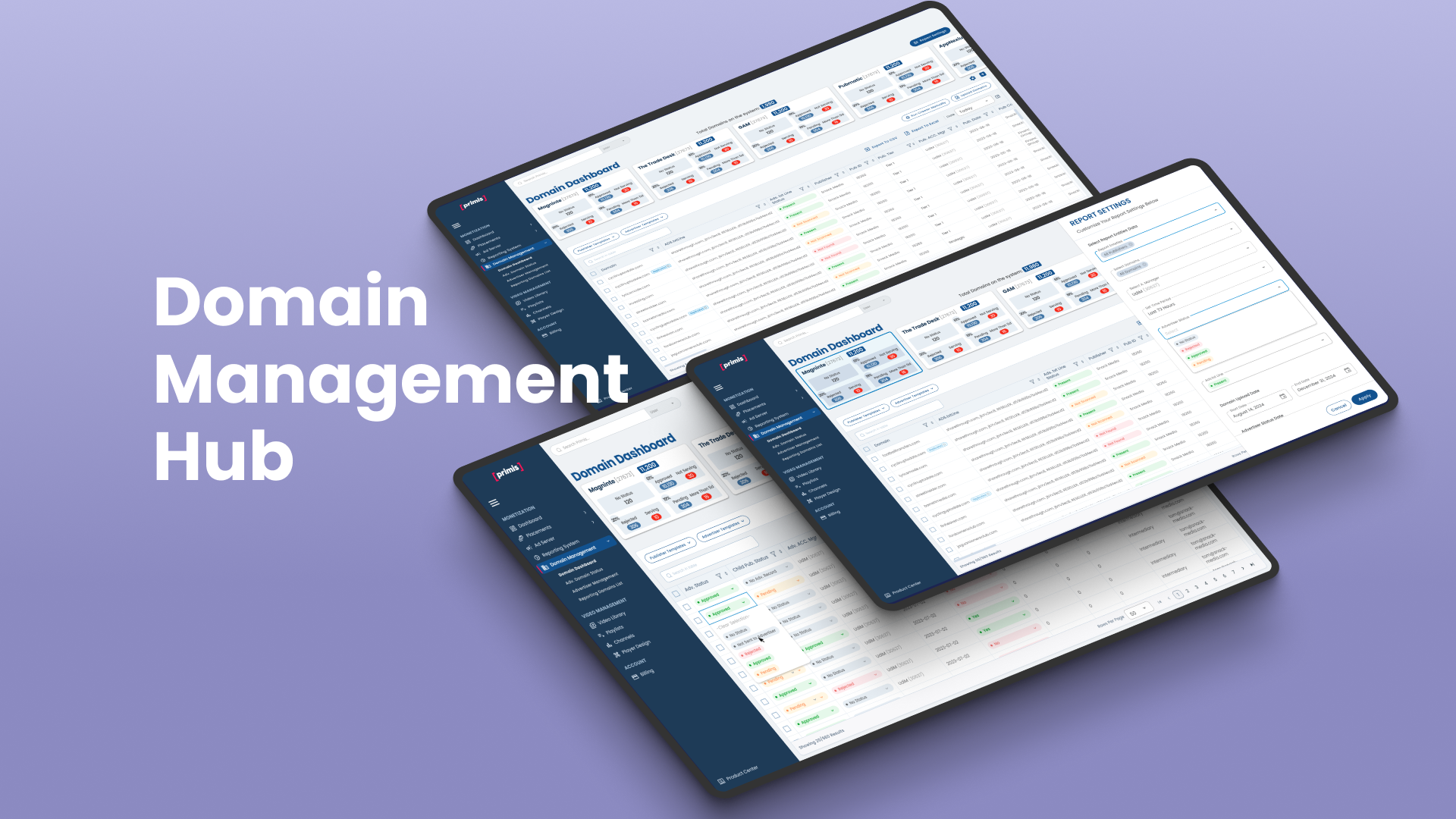
Primis Domain Management Hub (SSP Dashboard)
Designing a scalable system to manage complex domain configurations across high-volume ad infrastructure
Company
Primis Video Discovery
Product
Configurations Platform
Feature
SSPs Domain Management Hub
Year
2025
About Primis
Primis is a data Ad-Tech platform that powers large-scale monetization operations across multiple SSPs.
It supports complex domain-level workflows, performance tracking, and operational decision-making for internal teams managing monetization at scale.
About The Product
The platform supports large-scale domain operations, where users monitor performance, manage domain lifecycles, and respond quickly to changing monetization conditions.
The Ad-Tech Configurations & Management Platform is a system used by internal operations teams to manage and monitor domains across multiple SSP environments.
It supports large volumes of data and enables users to track performance, manage configurations, and optimize monetization strategies at scale.
The Feature
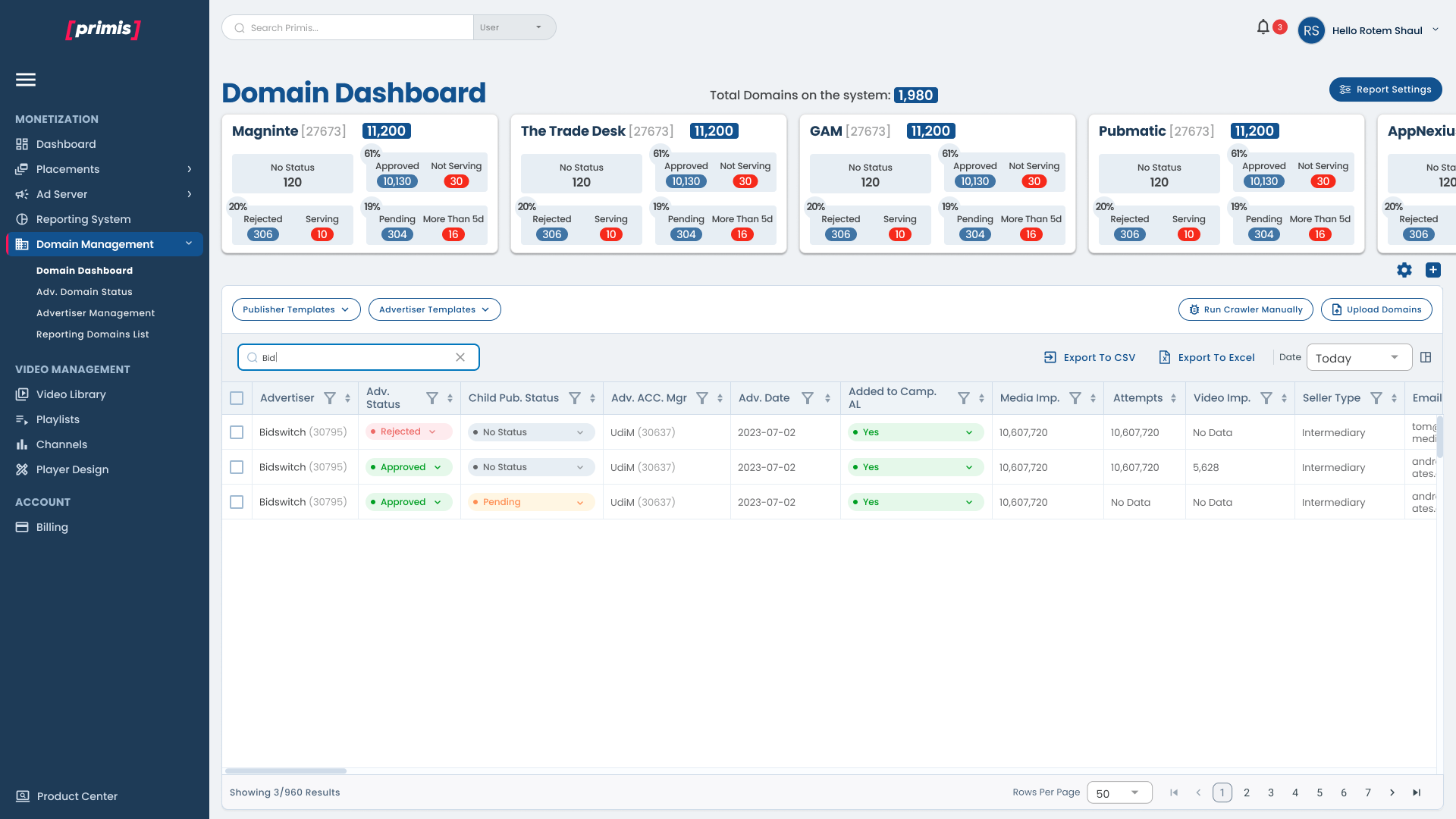
Domain Dashboard – SSP Domain Management Hub
A centralized system designed to replace fragmented, spreadsheet-based workflows with a structured, real-time interface for managing domain lifecycles – from onboarding and approval to monitoring, status tracking, and bulk operations.
Challenges
Primis operates a large-scale advertising platform managing thousands of domains, campaigns, and configurations across a highly dynamic ecosystem.
The existing system suffered from:
- Fragmented workflows across multiple tools
- High cognitive load for operational users
- Complex configuration processes prone to errors
- Lack of clear visibility into domain status and performance
This resulted in inefficiencies, slower operations, and increased risk of misconfiguration in a high-stakes environment.
Purpose
To transform fragmented domain workflows into a scalable, decision-driven platform that enables operations teams to monitor performance, prioritize domains, and act with confidence
Impact
- Reduced domain configuration time by 20%
- Improved operational efficiency by simplifying complex workflows
- Reduced user errors in configuration-heavy flows by 12%
- Increased clarity and usability for high-volume domain management
My Role in this Project
Qualitative Research
Gathered user insights to drive evidence-based design.
Sketch Visualization
Defined the dashboard’s visual direction, layout logic, and information hierarchy.
Rapid Prototyping
Validated ideas through testing.
Product Packaging
Crafted the unboxing experience.
Development Handoff
Ensured technical feasibility.
Usability Testing
Tested early flows with users managing dozens to hundreds of domains.
Defined the product structure and experience architecture
- Led the end-to-end product design for the domain management system
- Defined UX strategy and interaction patterns across multiple product domains
- Worked closely with Product leadership, Engineering, and stakeholders
- Facilitated design discussions and aligned cross-functional teams
- Acted as a design lead in practice, shaping both product direction and design standards
1. Understanding the System
- Conducted stakeholder interviews and mapped complex domain workflows
- Identified key friction points in configuration and monitoring processes
- Analyzed how users interacted with multiple disconnected systems
2. Defining a Scalable UX Model
- Consolidated fragmented workflows into a unified management interface
- Introduced a clear hierarchy and structure for domain-level operations
- Designed system-level interactions to support scale and flexibility
3. Designing for Clarity in Complexity
- Translated complex backend logic into intuitive UI patterns
- Designed dashboards that surface critical information at a glance
- Reduced cognitive load through better grouping, hierarchy, and visual cues
4. Building for Scale
- Defined reusable components and patterns within the design system
- Ensured consistency across multiple product areas
- Enabled future scalability of domain management workflows
Key Decisions & Trade-offs
- Simplified complex configuration flows while maintaining advanced control
- Balanced data density with usability in high-volume dashboards
- Standardized domain structures to support scalability
Design Leadership
- Led UX strategy across domain management systems
- Influenced product decisions and prioritization
- Facilitated cross-functional alignment between Product and Engineering
- Defined scalable UX patterns and system structure
The Work Process
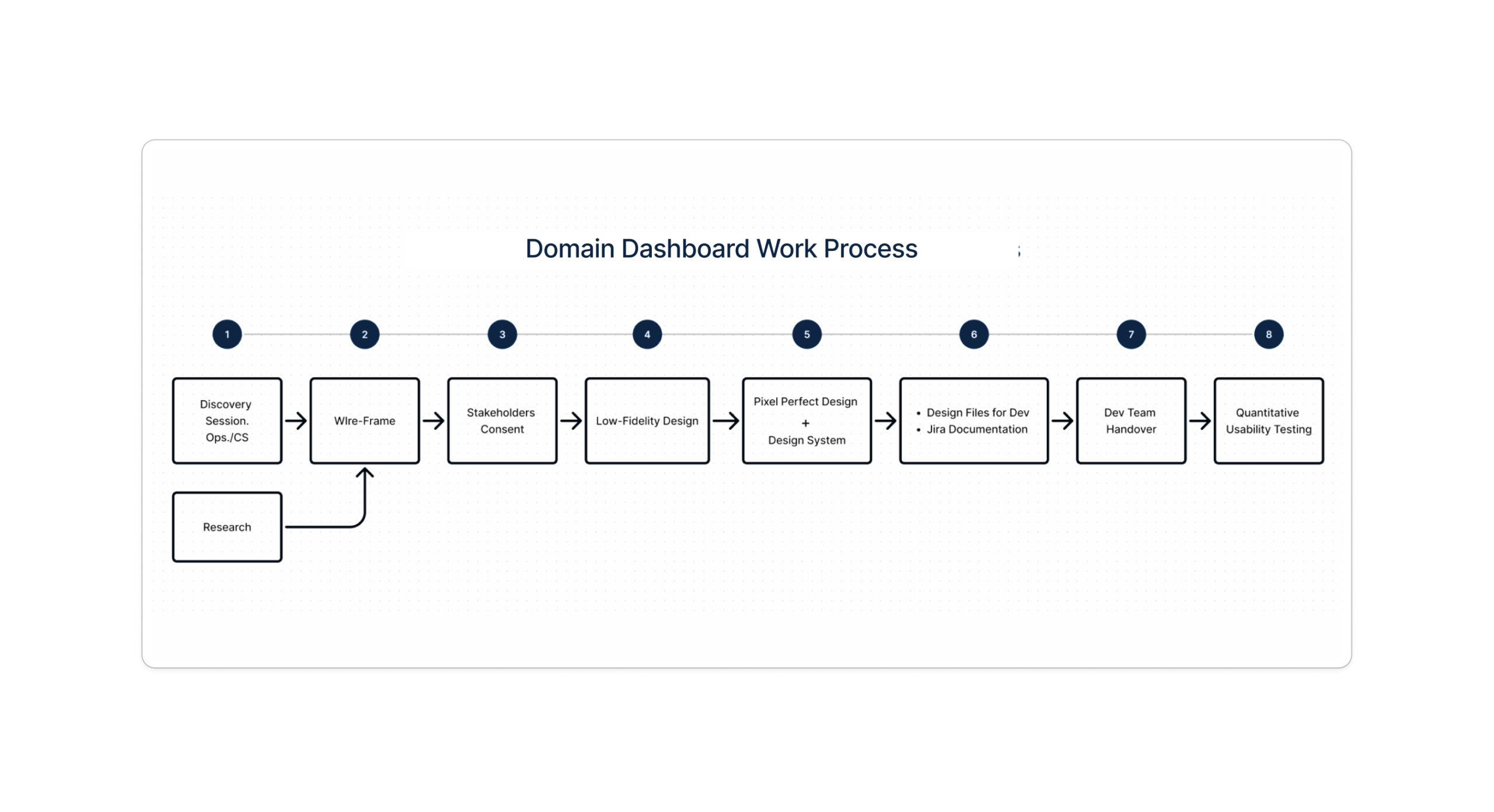
Research
Stakeholder interviews & job shadowing
Conducted user interviews and collaborated with stakeholders to understand domain management workflows, decision-making processes, and key performance indicators. Identified gaps in visibility, prioritization, and data interpretation across domain-level operations.
Usability testing on prototypes
Tested early flows with actual users managing dozens to hundreds of domains and found that users struggled to keep the domains list file organized and follow the domain status.
Understanding the user’s routine work
Users were accustomed to spreadsheet-style interactions, so preserving familiarity was critical for reducing friction and accelerating adoption
Insights:
Users need real‑time system validity indicators
Domain projects are collaborative; teams must assign and track changes.
Users review and compare different domain statuses on a certain SSP (Approved domains vs. Approved BUT not serving / Rejected vs. Rejected BUT Serving).
A key insight was that users were not lacking data – they were lacking the ability to confidently act on it and take actions.
Solution
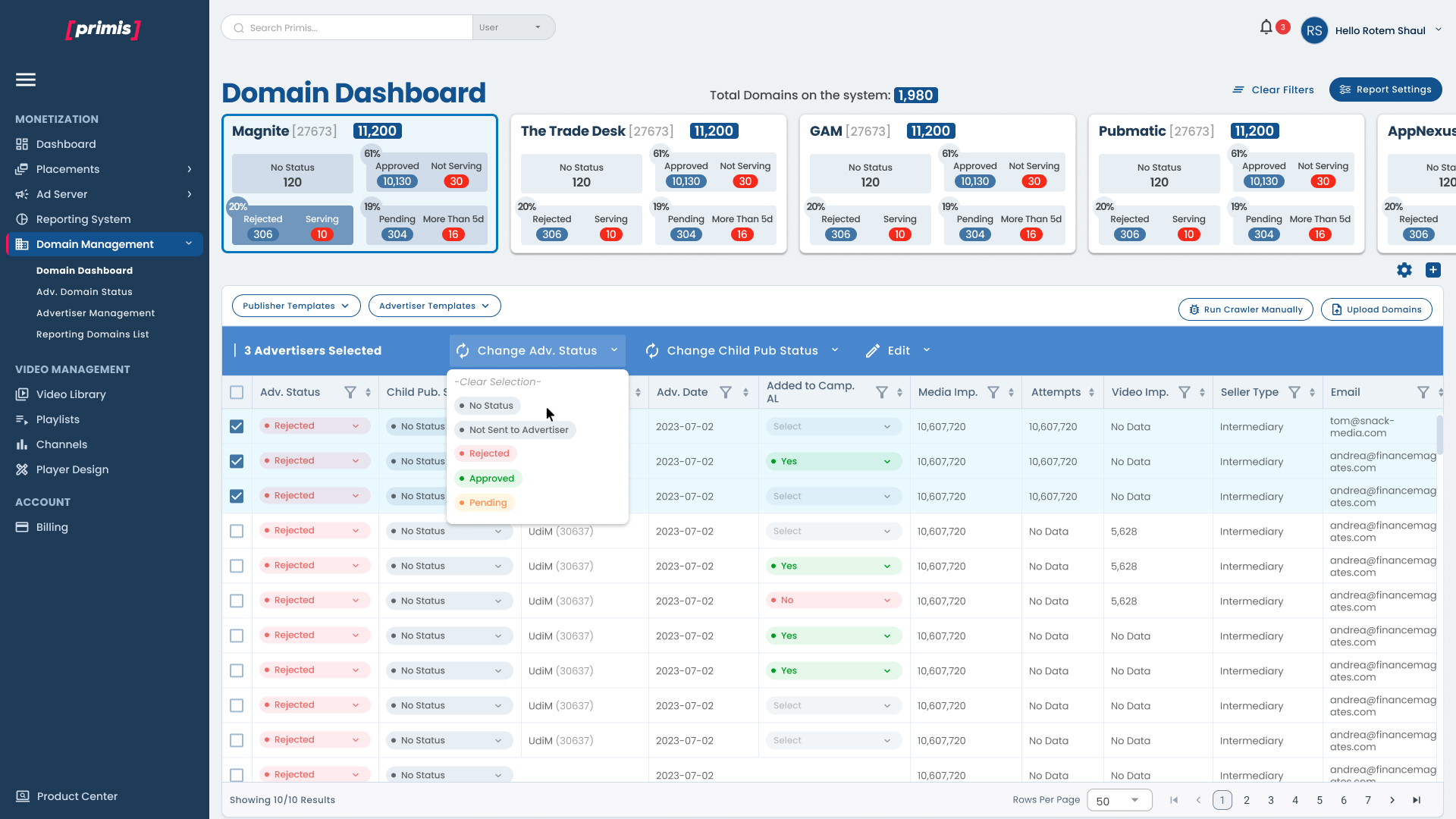
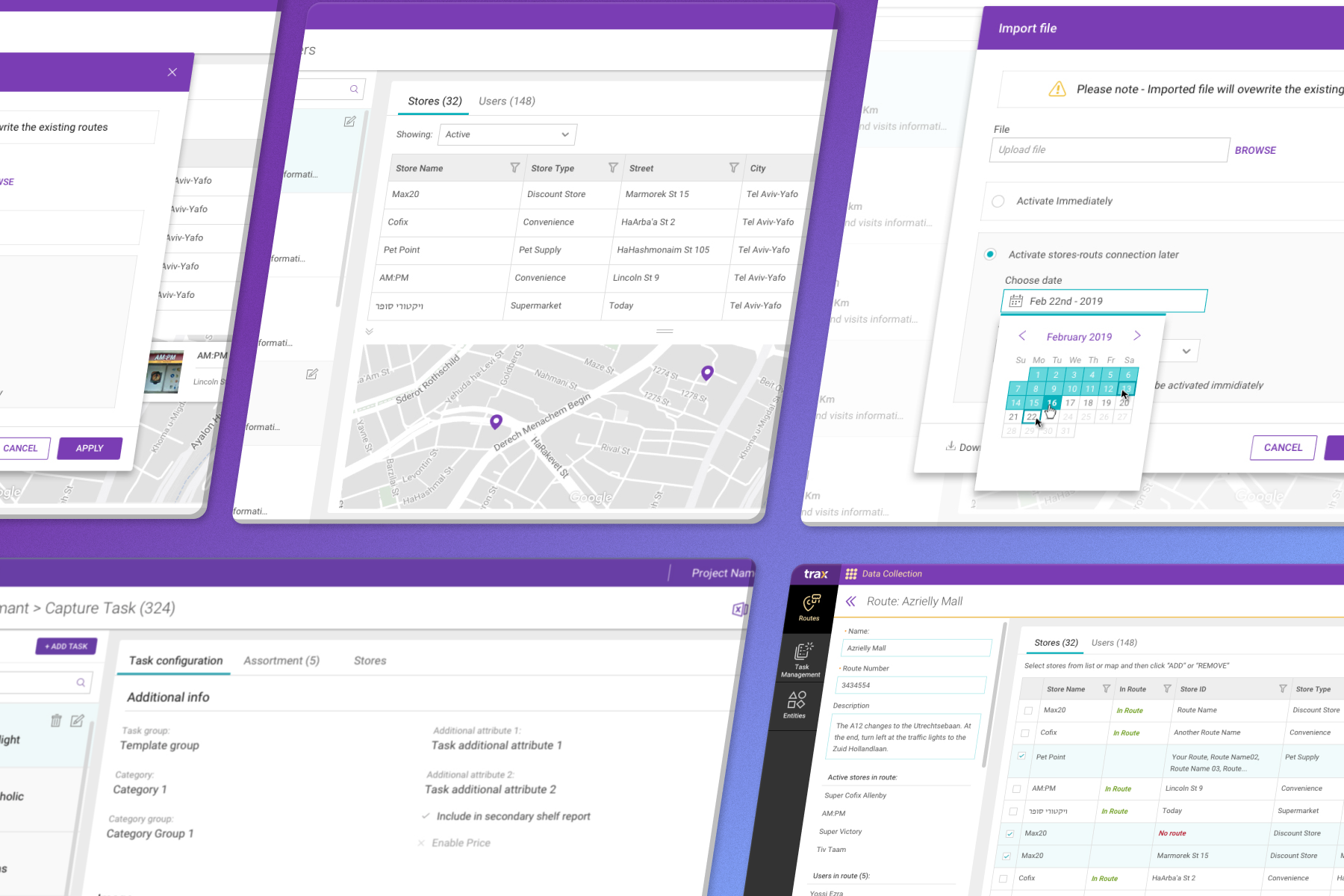
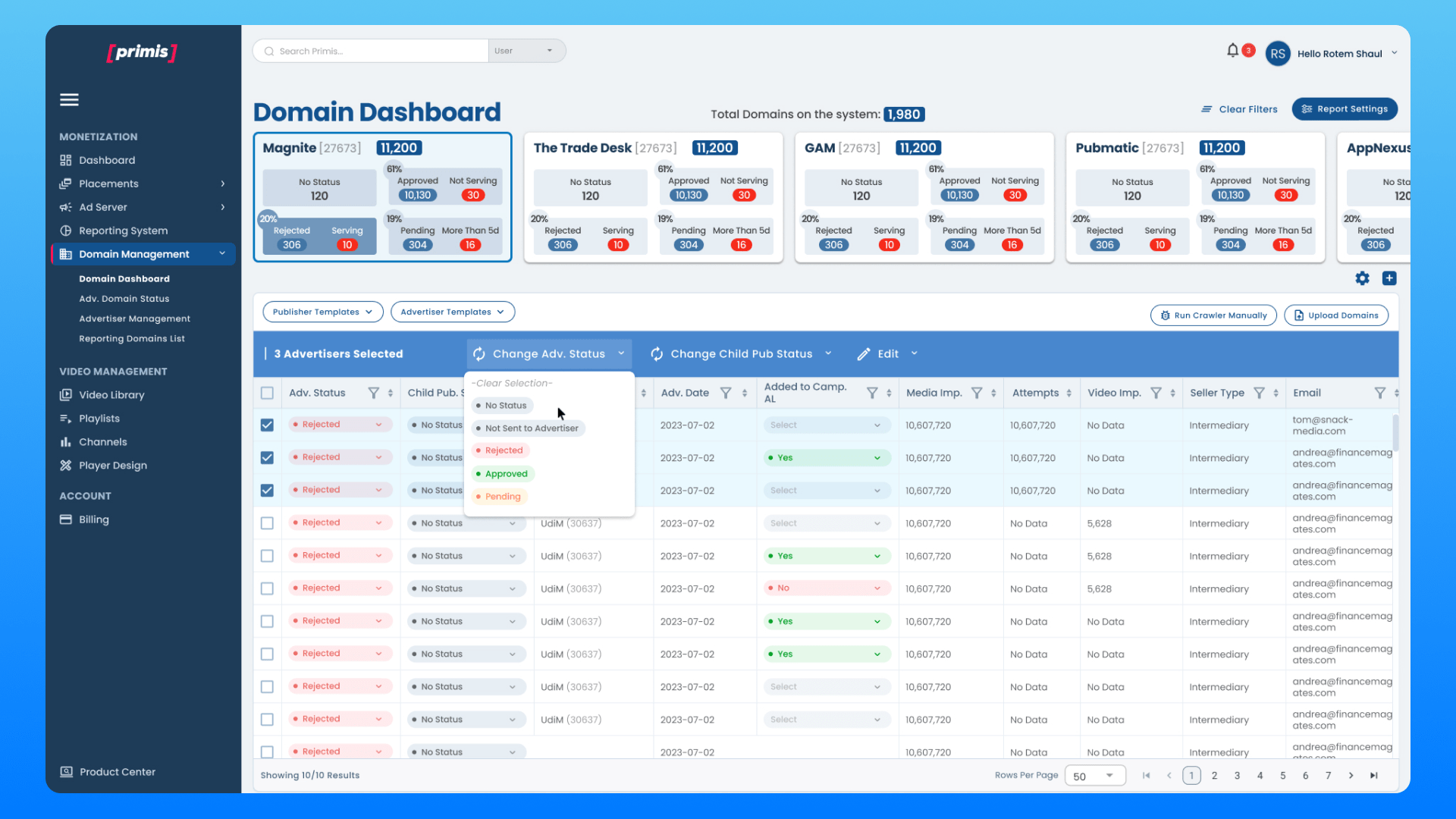
Because users were deeply accustomed to spreadsheet-style workflows, I designed the dashboard around familiar interaction patterns – including inline editing, bulk changes, file import, and a searchable, filterable table – to reduce friction and accelerate adoption
Familiar, spreadsheet-inspired interaction model
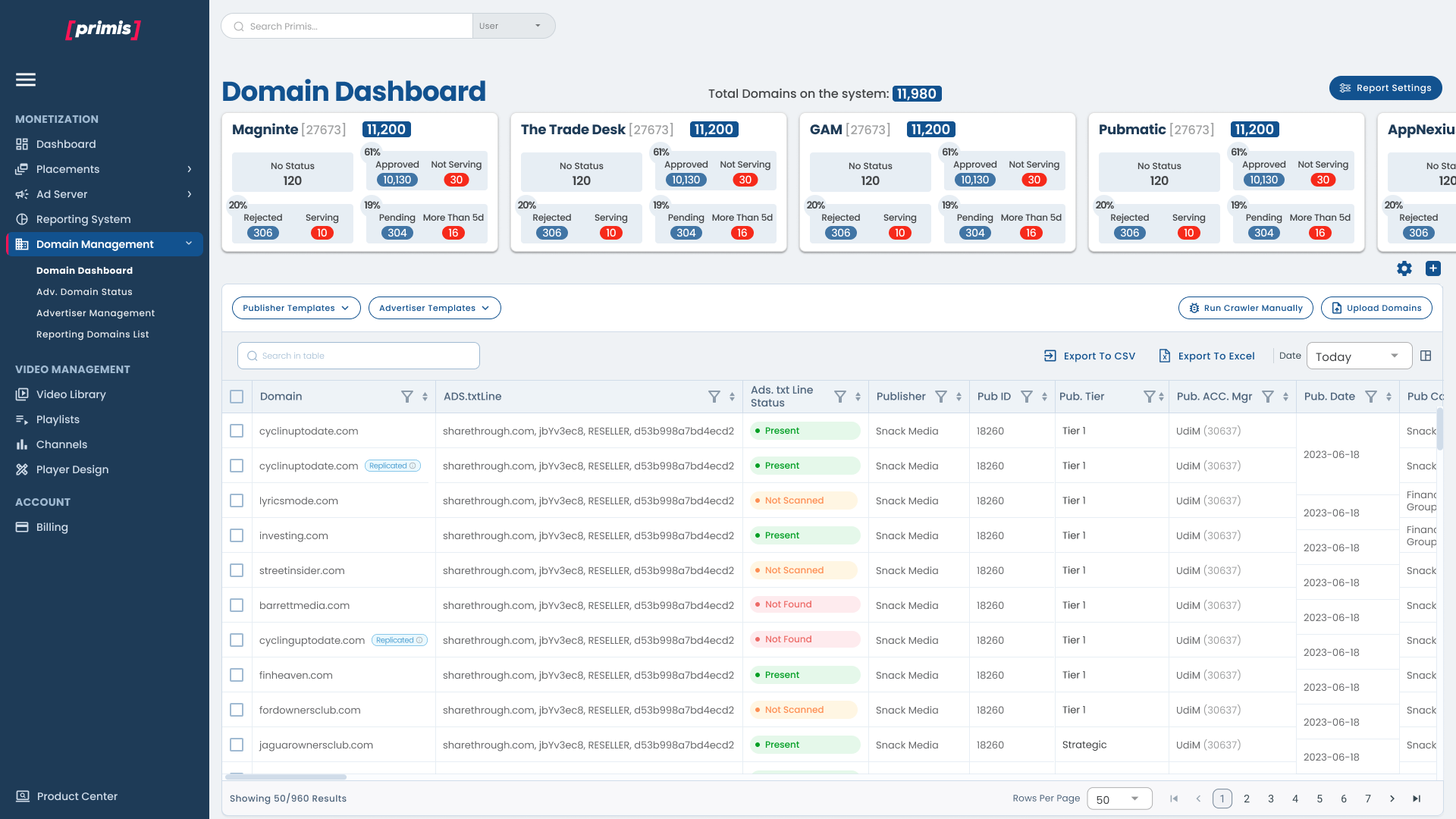
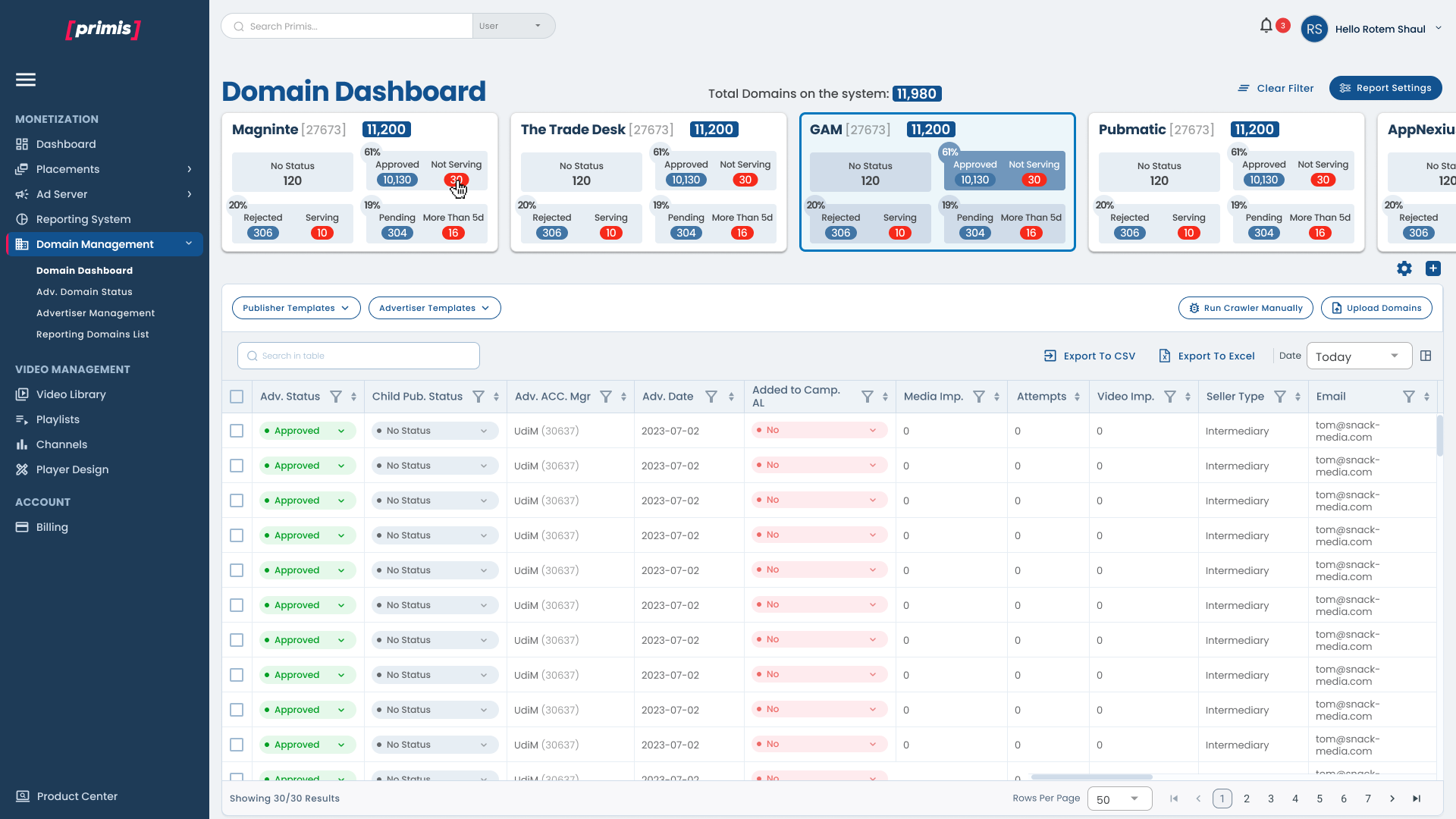
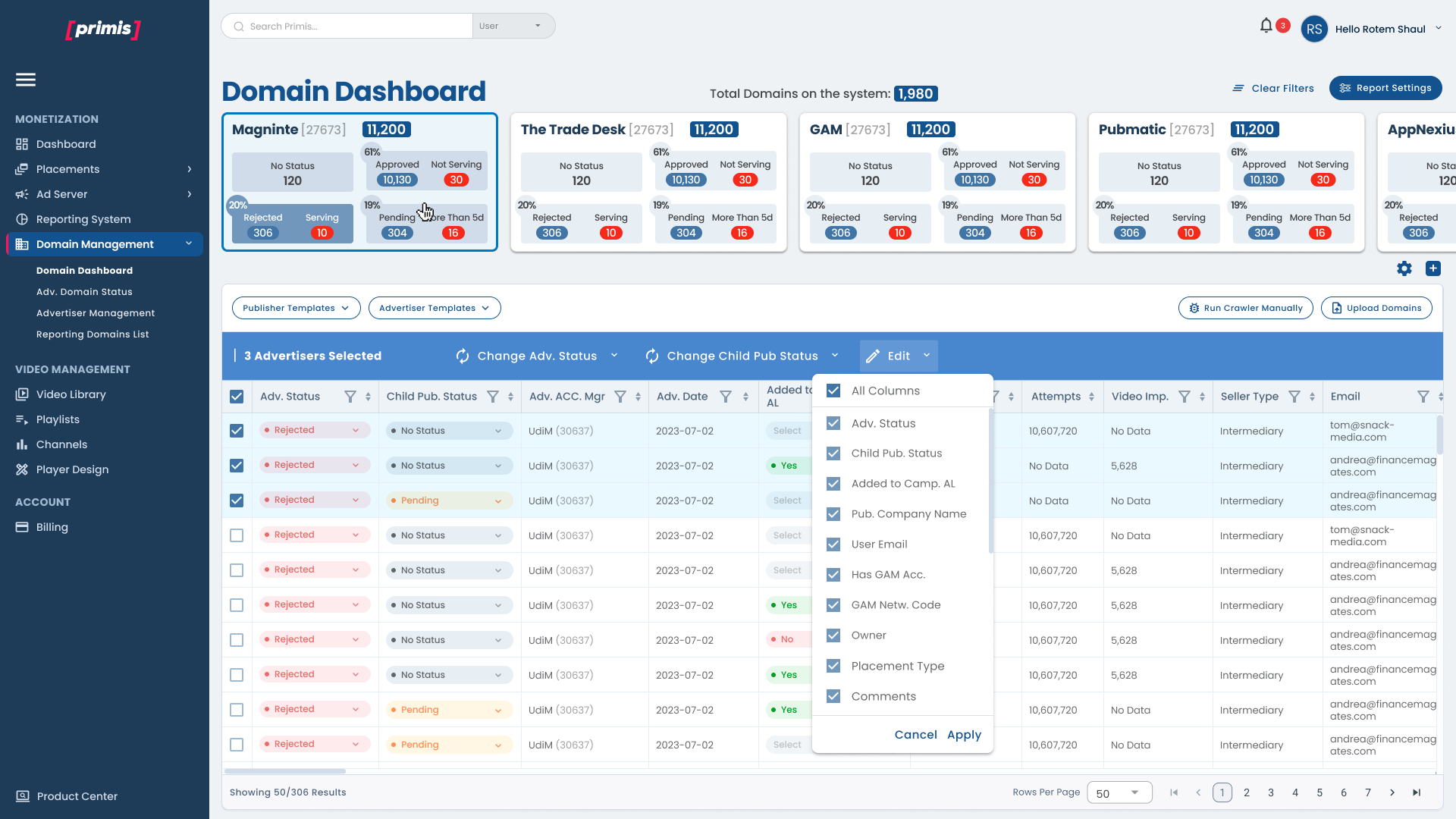
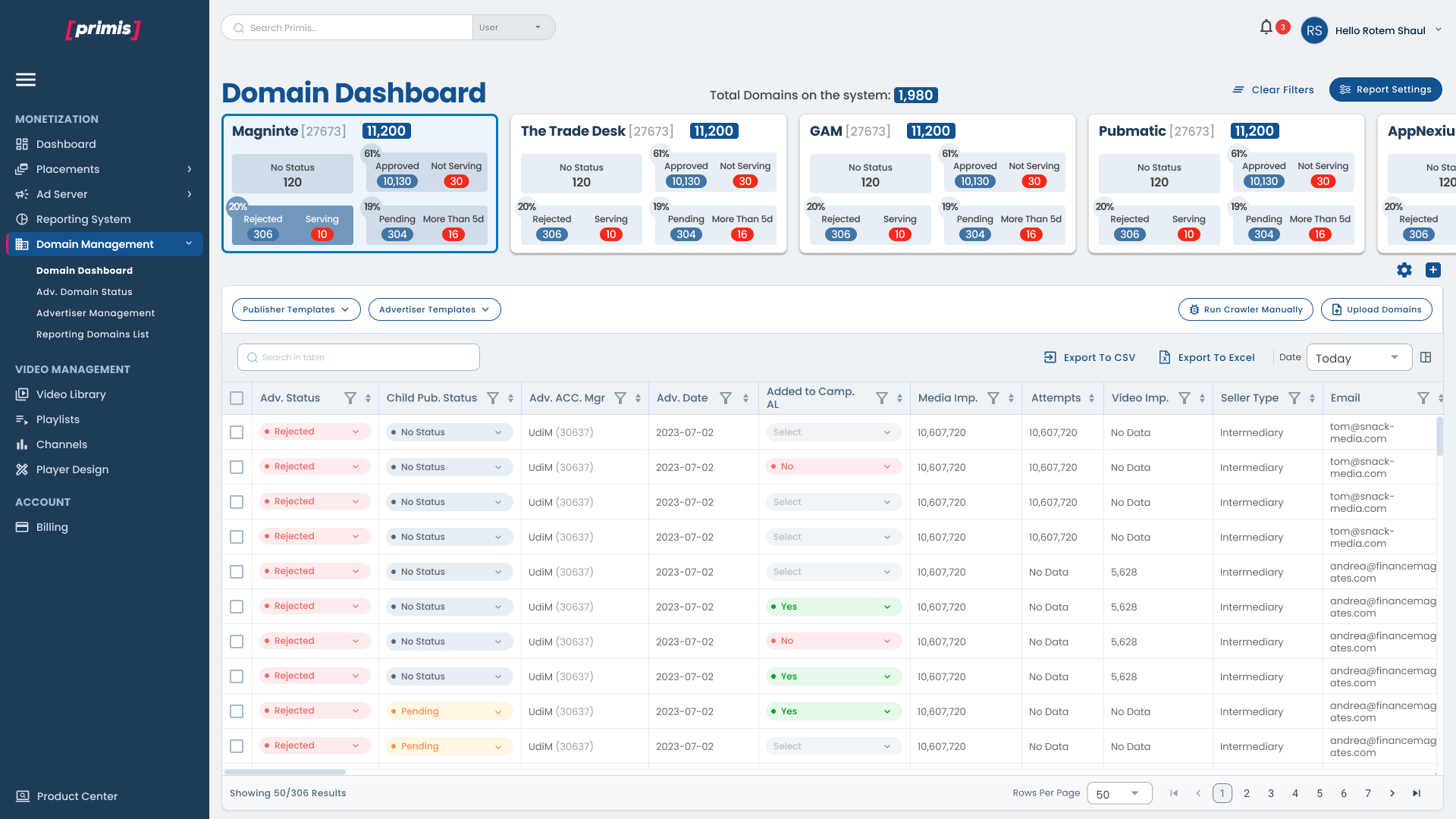
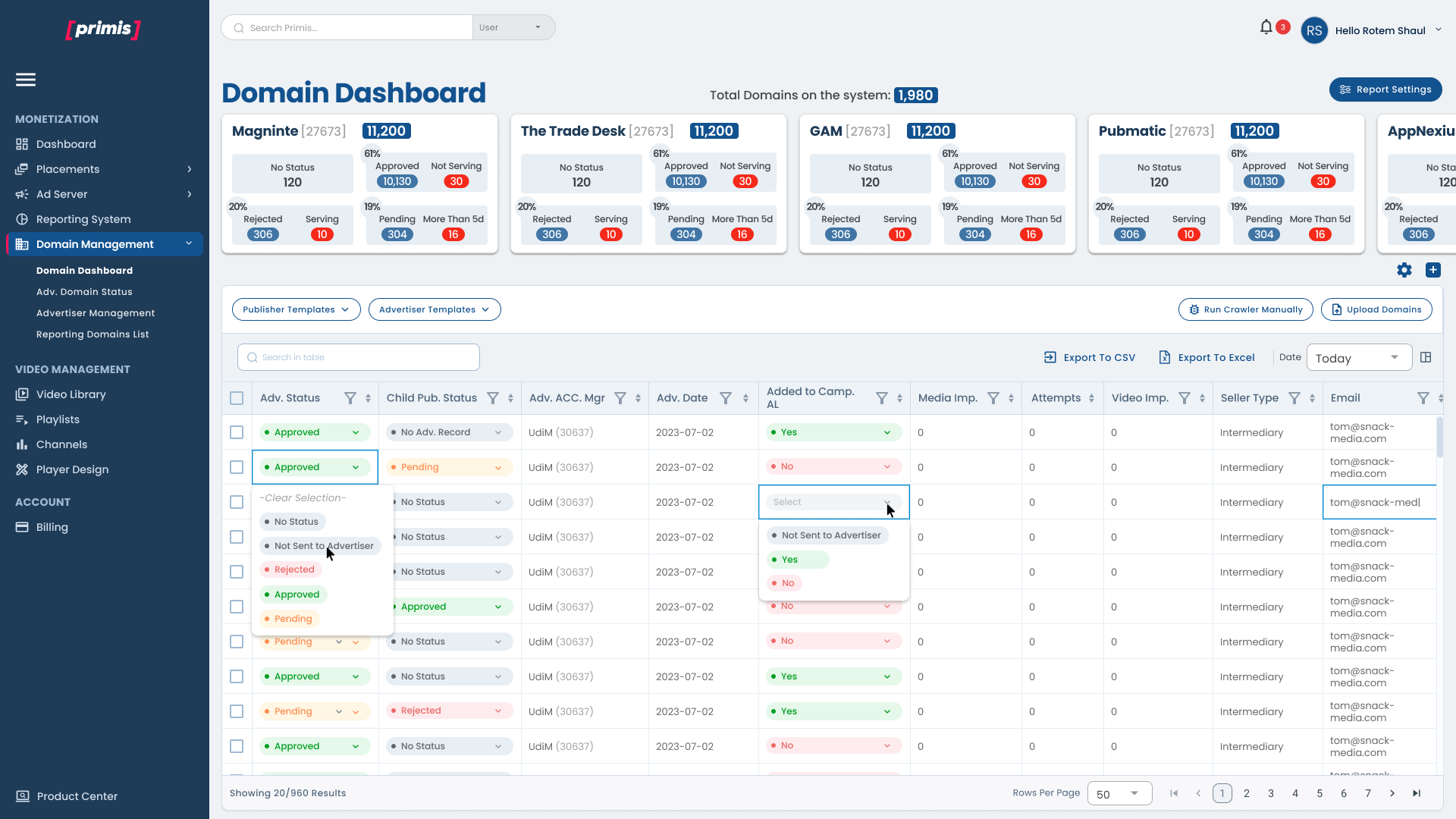
Designed a table-based interface aligned with users’ existing workflows, enabling fast scanning, inline editing, bulk actions, and structured data interaction – reducing the learning curve and accelerating adoption.
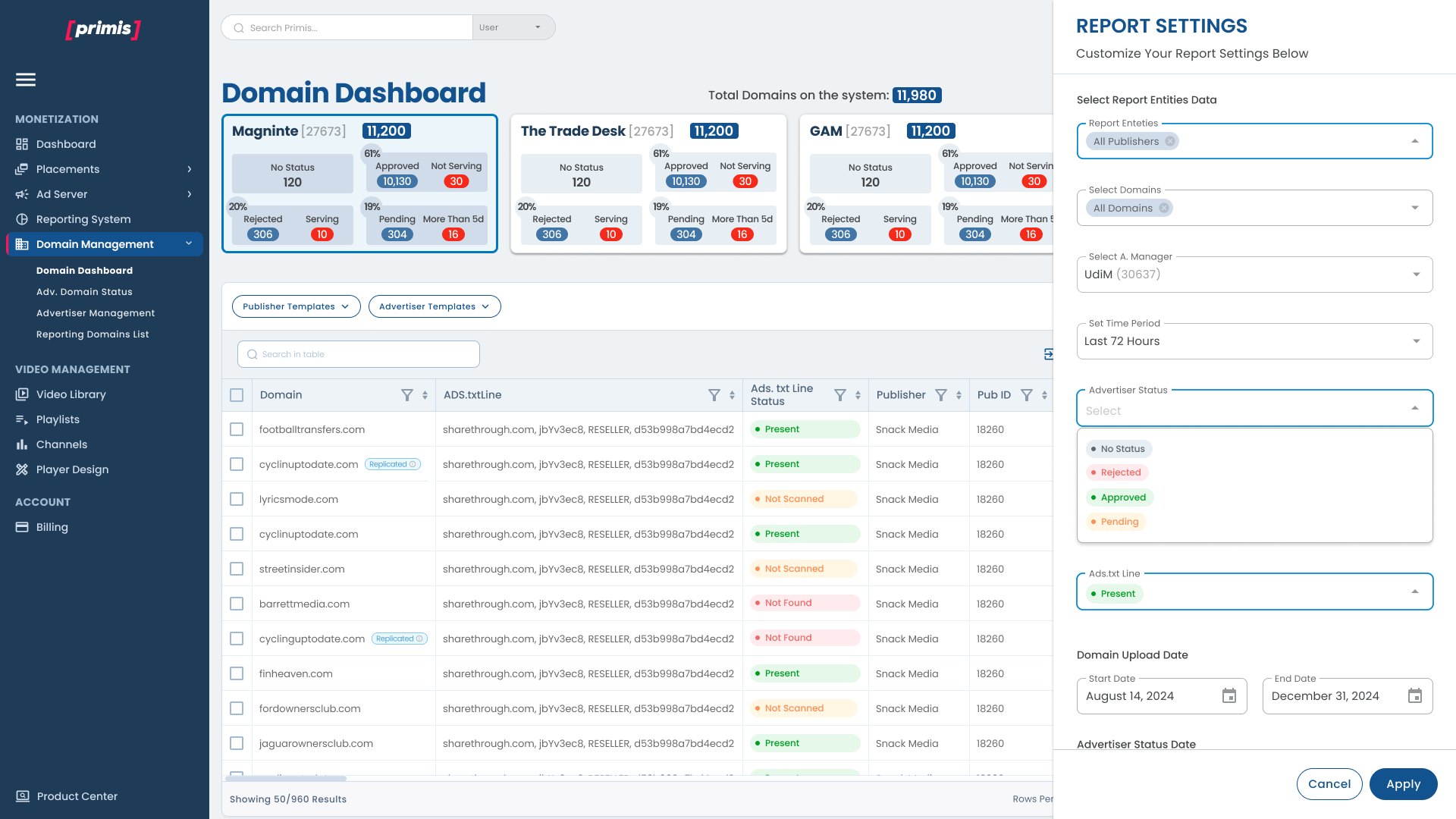
Action-oriented filtering & prioritization
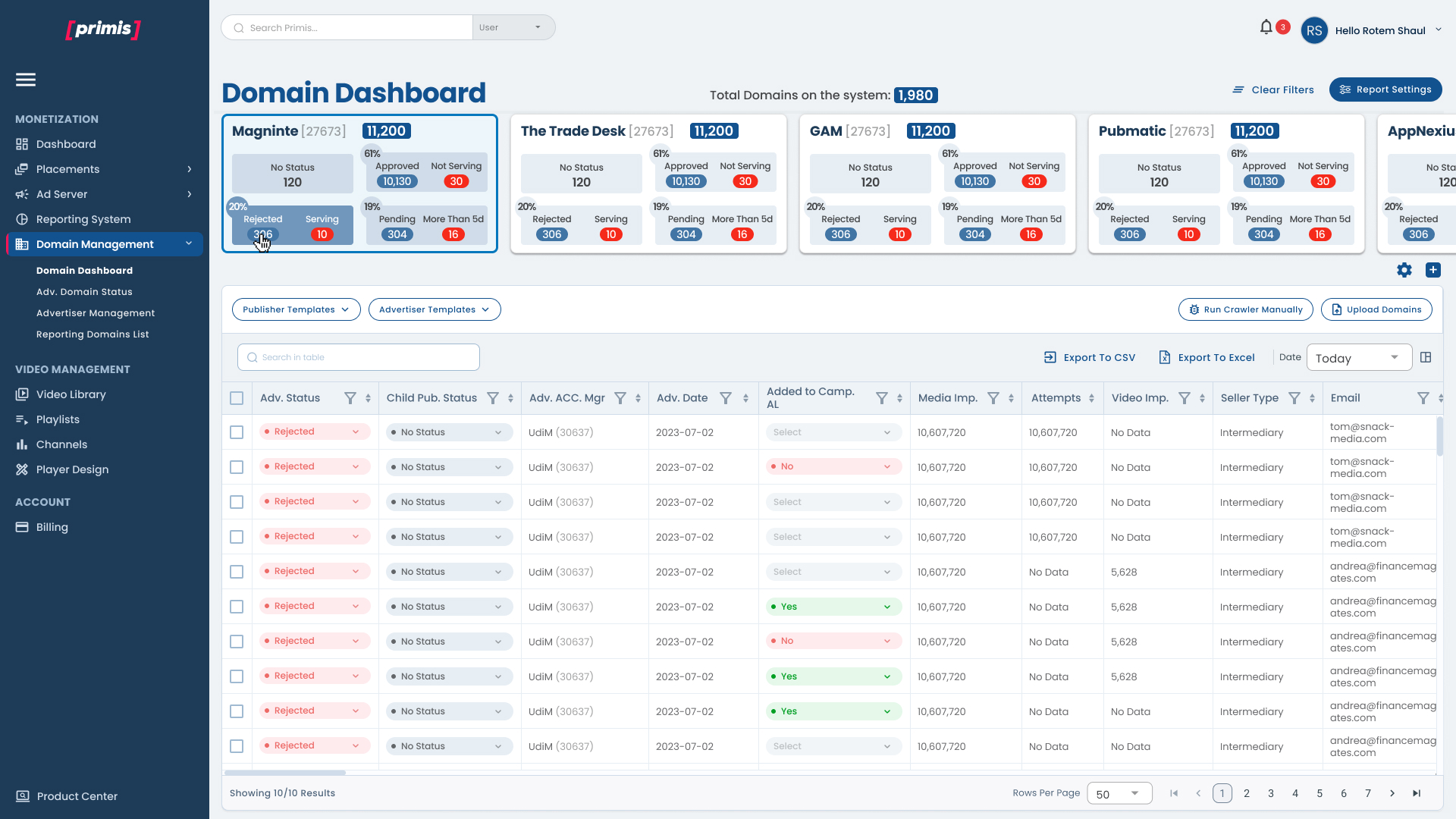
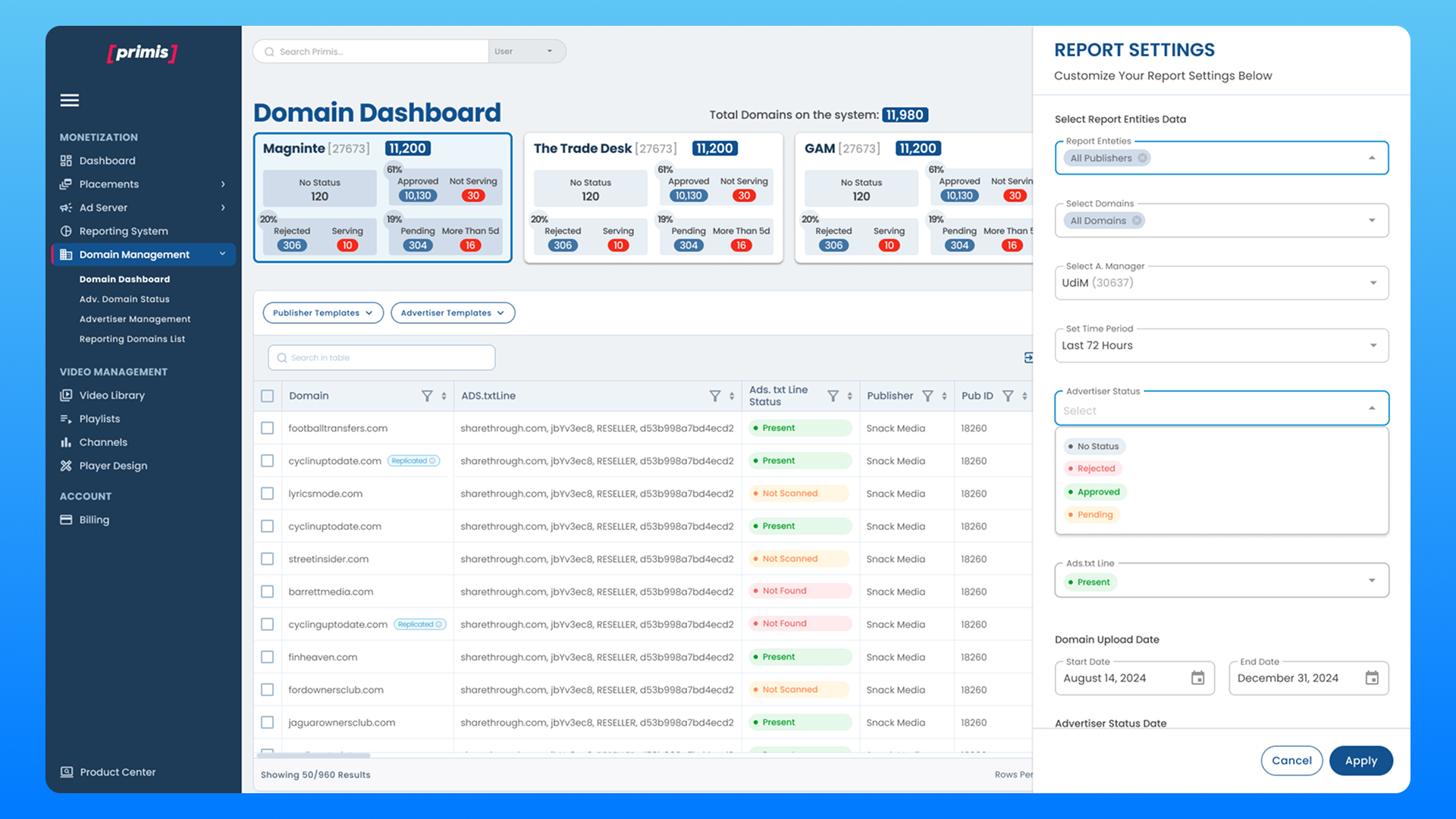
Introduced dynamic filtering based on SSP and domain status (e.g., Approved but not serving, Rejected but serving), allowing users to quickly identify anomalies, prioritize high-impact domains, and act on issues before they affect monetization.
Optimized domain table for fast decision-making
Built a scalable table with advanced search, filtering, and inline editing – enabling users to manage large volumes of domains efficiently without leaving their main workflow.
Structured domain configuration & safe bulk operations
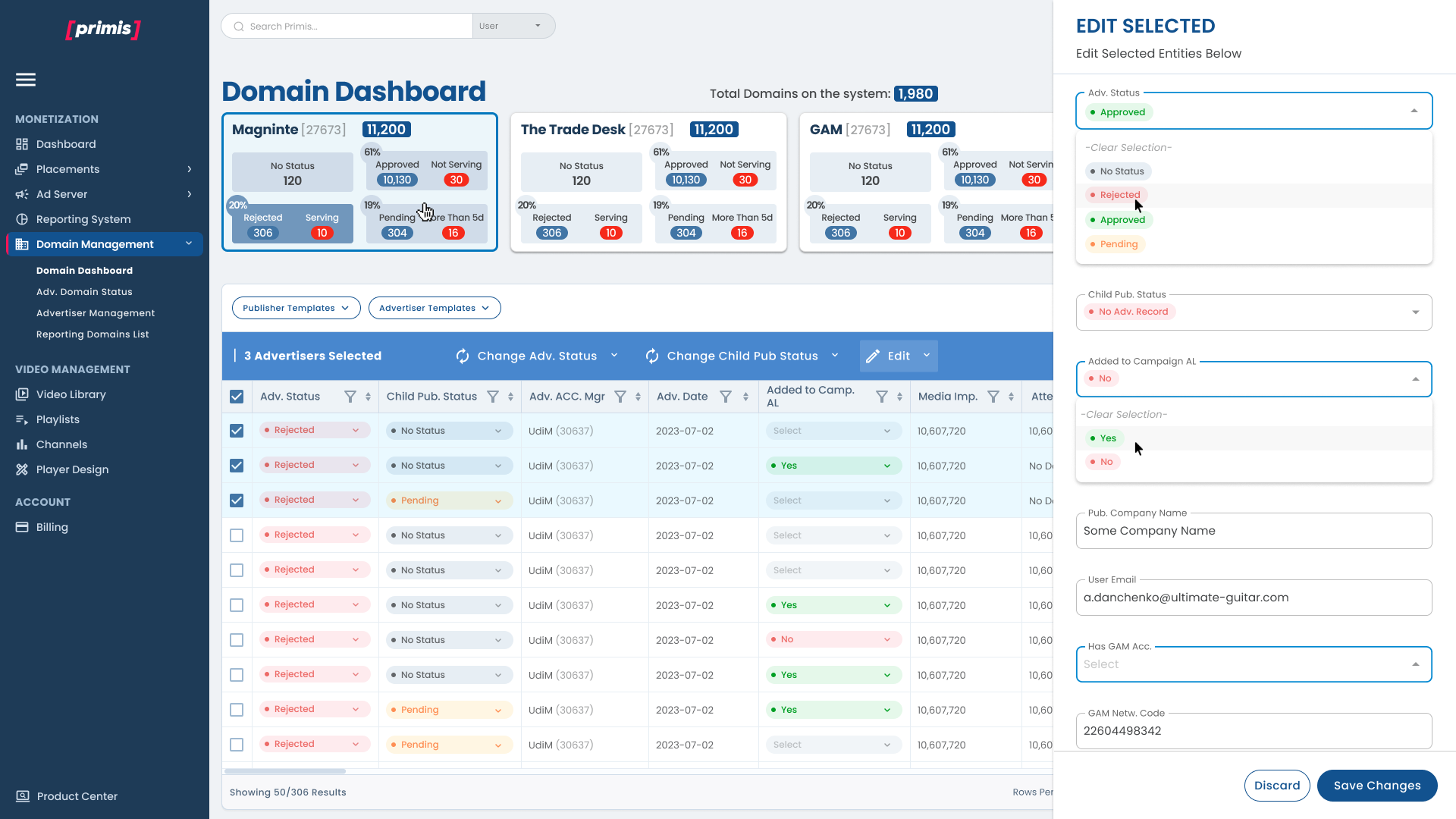
Designed bulk and single-item editing flows with clear feedback, validation, and permission logic – reducing operational risk when handling sensitive domain configurations at scale.
Streamlined domain onboarding
Enabled CSV / Google Sheets import to support fast onboarding of large domain sets, eliminating manual input and reducing friction in setup processes.
Inline editing for rapid iteration
Allowed quick, in-context updates without navigation overhead, supporting real-time adjustments during ongoing operations.
Role-based permissions & controlled actions
Integrated permission layers into workflows to ensure that sensitive actions (such as approvals or bulk edits) are restricted and auditable.
Real-time system feedback & visibility
Ensured immediate reflection of changes across the system, enabling teams to stay aligned and make fast operational decisions based on up-to-date domain status.
Outcome
Delivered a scalable, intuitive domain management system that transformed how operational users interact with complex advertising infrastructure – enabling faster workflows, better decision-making, and improved system reliability.
The redesigned system enabled operations teams to manage large-scale domain environments with greater clarity, speed, and confidence.
Improved visibility and structured data interaction helped users quickly identify performance issues, prioritize high-impact domains, and act more efficiently.
Streamlined workflows and safer bulk operations reduced friction and minimized the risk of errors when handling sensitive configurations.
More scalability, more reliability, and easier to operate across multiple SSPs. Enabling operations teams to manage and optimize hundreds of domains simultaneously, significantly improving speed and accuracy in monetization-related decisions.
Together, these solutions transformed fragmented domain data into a structured, actionable system that supports efficient monitoring and confident decision-making at scale.
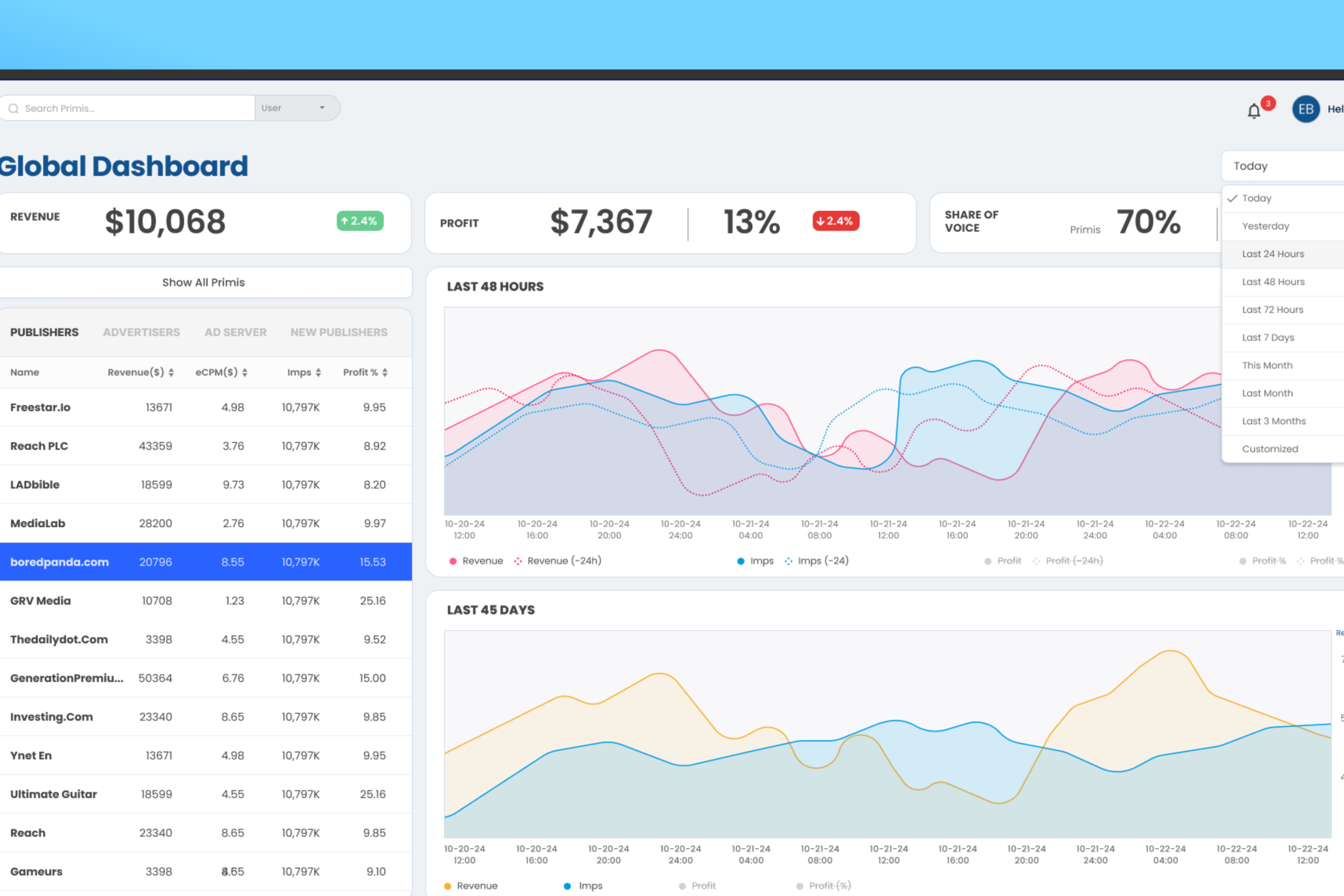
Domain Dashboard - Ideation Wire-Frame
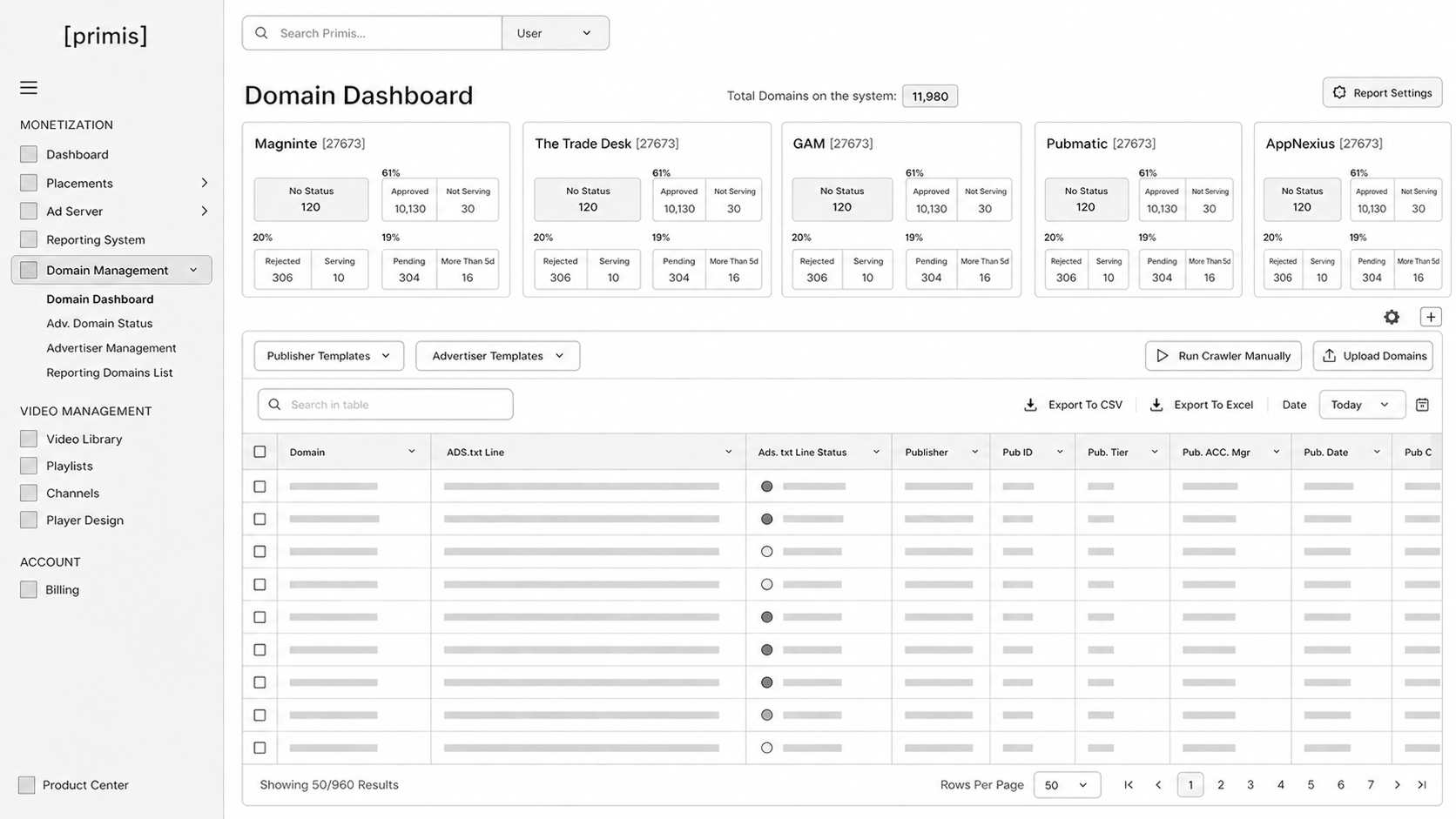
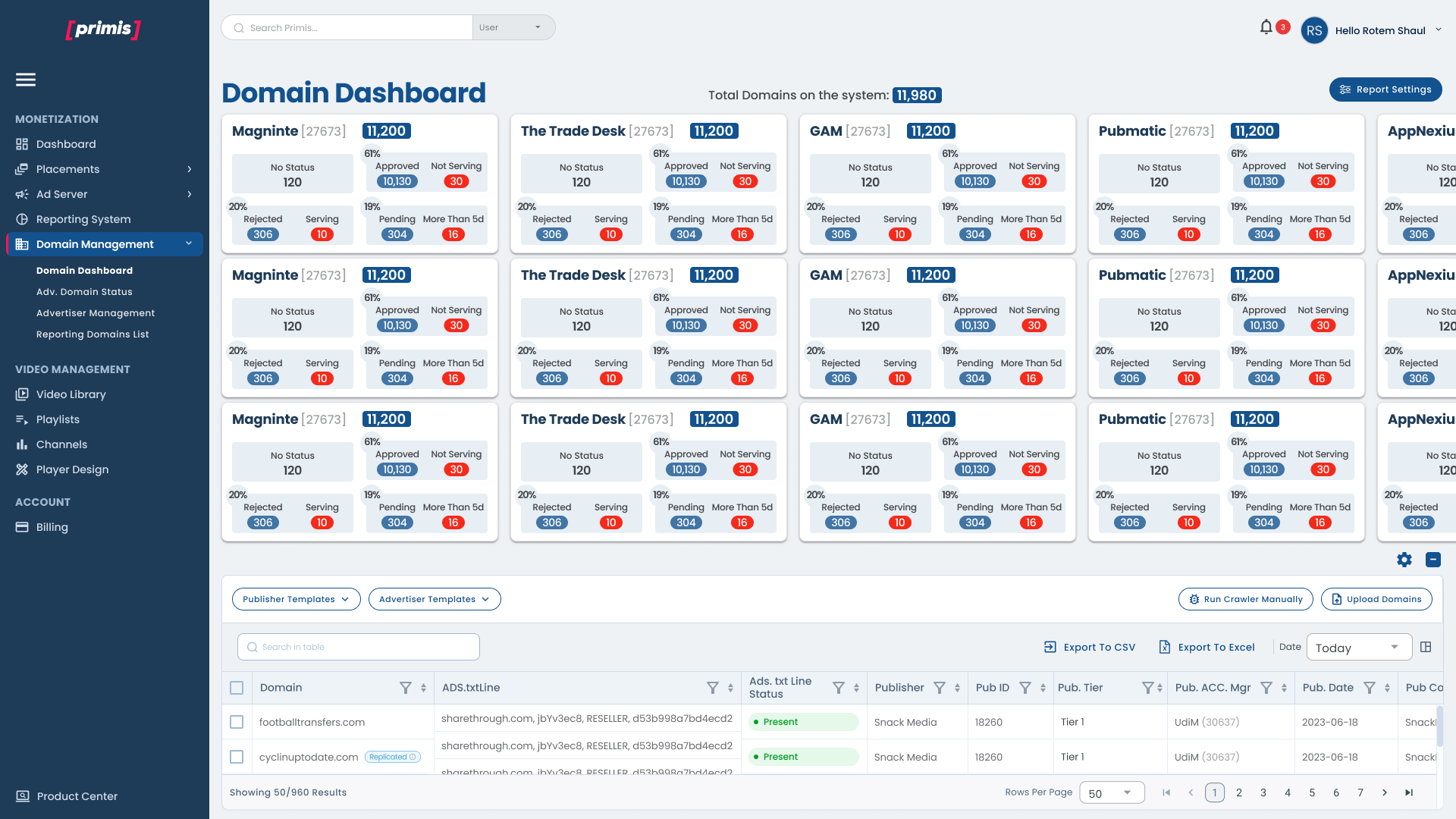
Domain Dashboard Management Screen