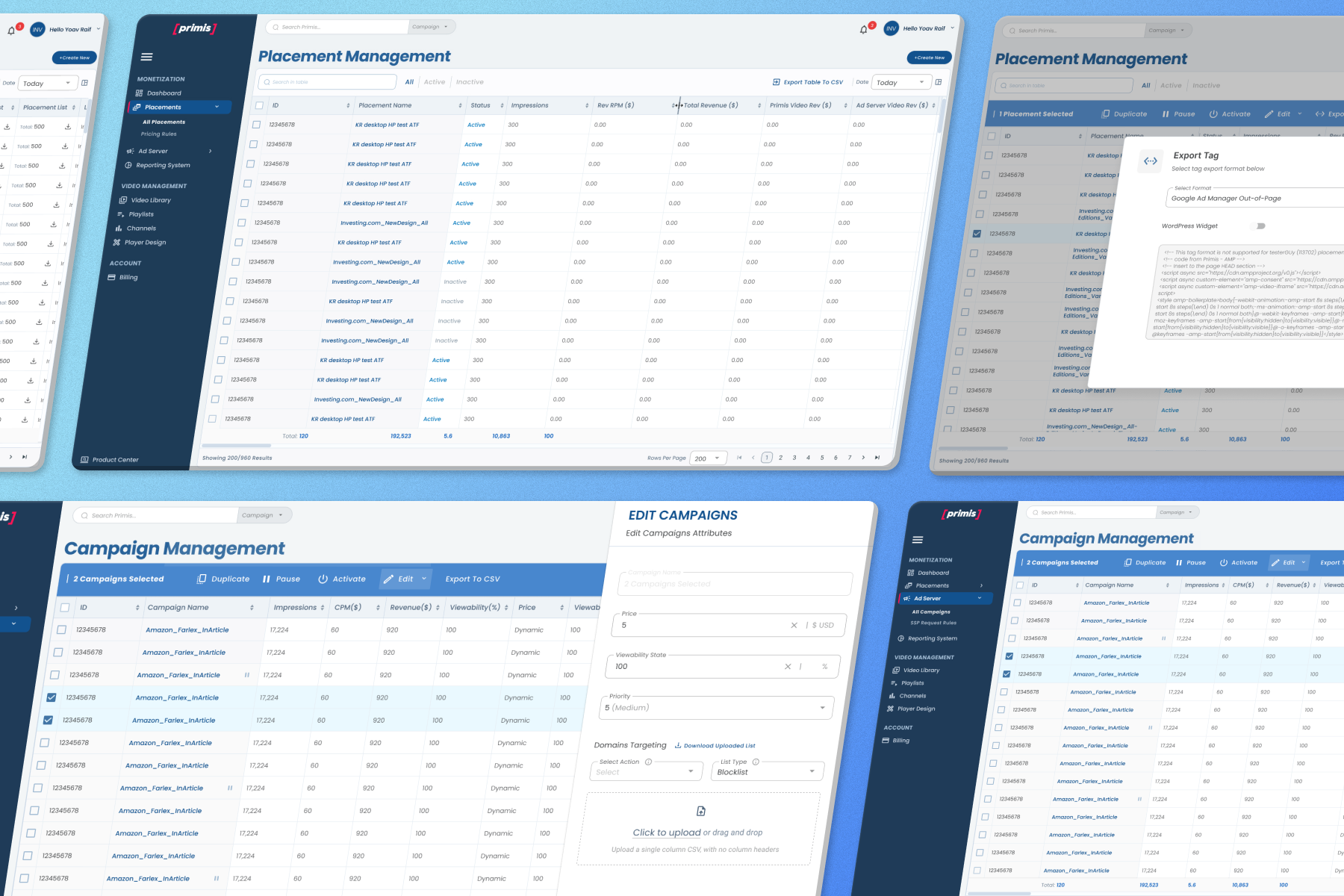
Campaign & Placement Management
Designed a complex campaign and placement management system used to configure, control, and optimize large-scale advertising operations across multiple domains and environments.
Company
Primis Video Discovery
Product
Configurations Platform
Featue
Campaign & Placement Management
Year
2025
About Primis
Primis is a video Ad-Tech & monetization company.
Primis platform helps publishers increase revenue by enabling users to discover high-quality video content, maximizing video monetization opportunities
About The Product
An Ad-Tech Configurations & Management Platform
A complex data platform used by internal teams to configure, manage, and optimize large-scale advertising operations across campaigns, placements, and domains. The system supports high-volume workflows, multiple configurations, and critical business logic that directly impacts revenue performance.
The Feature
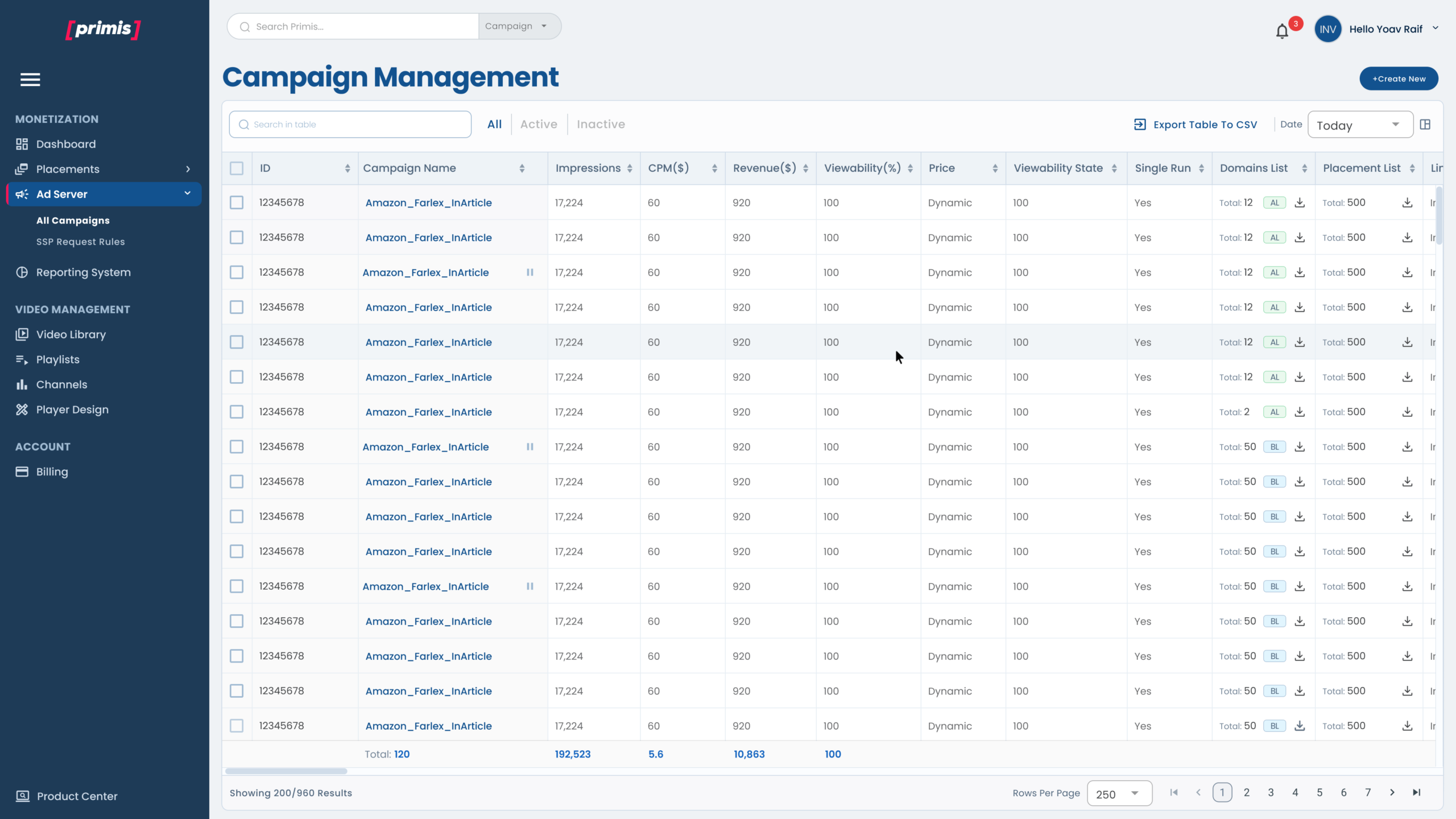
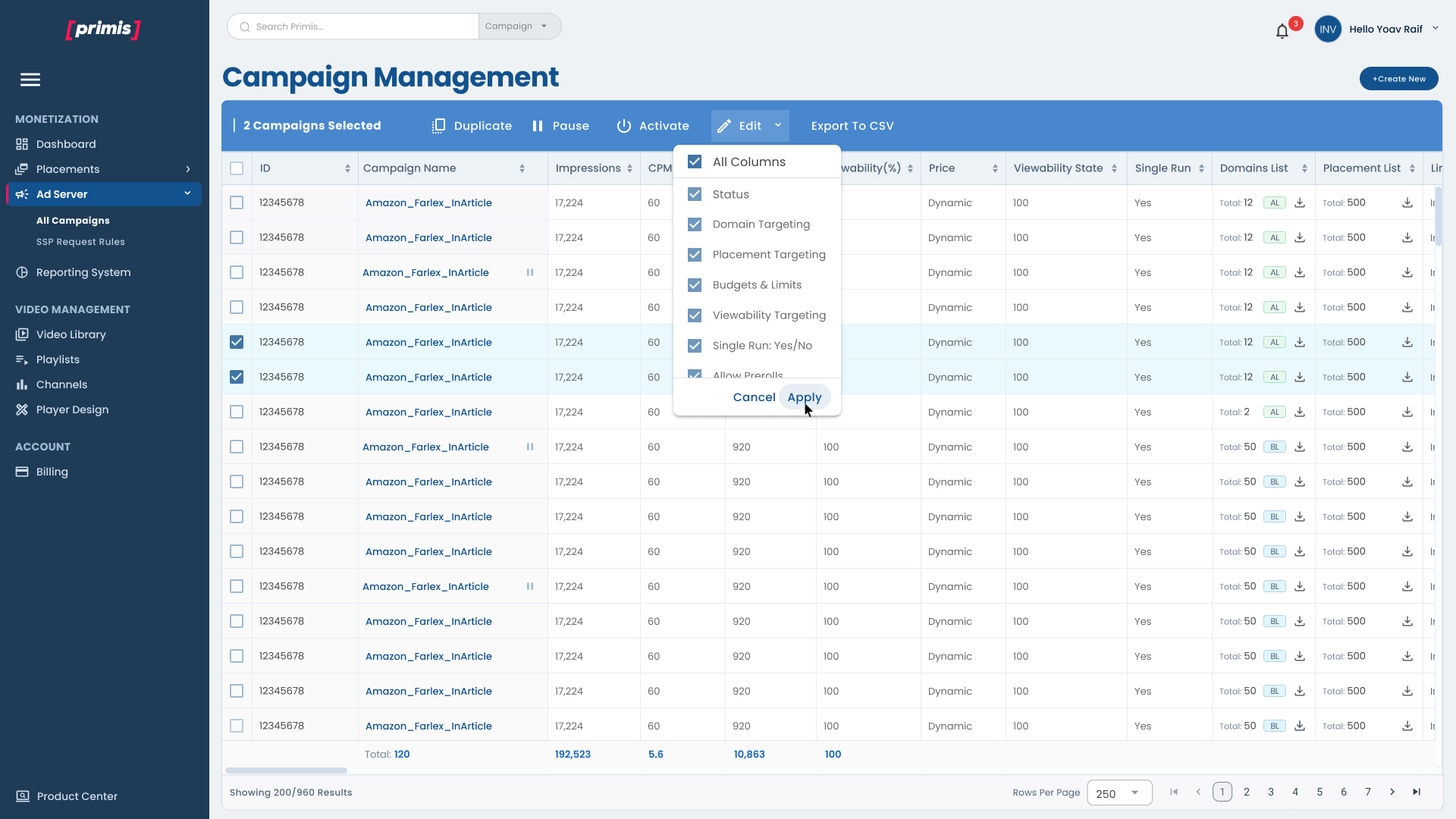
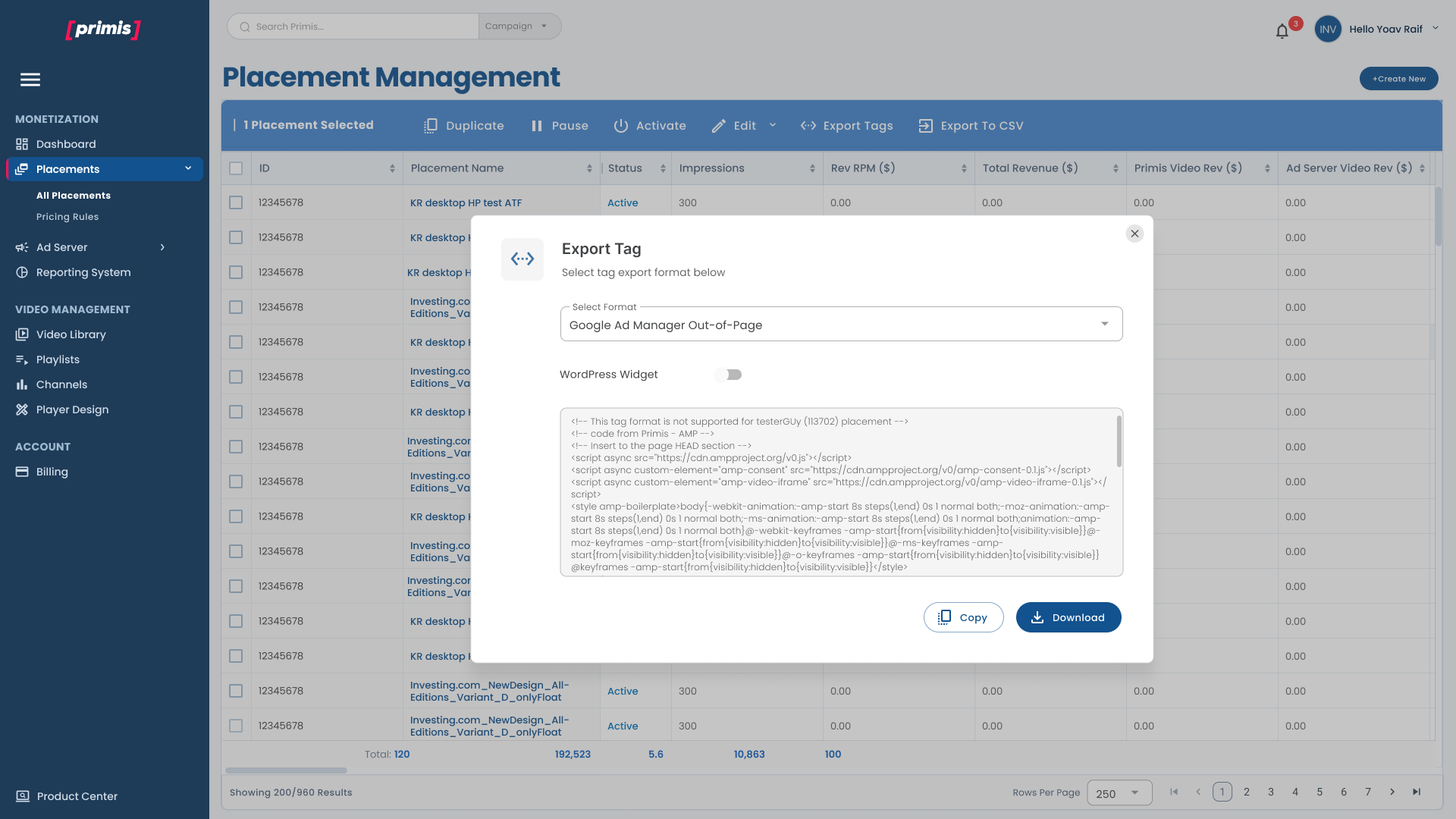
The Campaign Management table is a central interface within the platform, designed to help users manage, monitor, and optimize large volumes of campaigns and their associated entities, such as placements and domains.
It serves as the primary workspace for operational teams, where users need to quickly assess performance, identify issues, and take action across multiple campaigns simultaneously. The table brings together key metrics, configuration states, and status indicators into a single, actionable view.
Given the scale and complexity of the system, the challenge was to design a structure that supports efficient scanning, filtering, and interaction – enabling users to move from high-level insights to granular actions without losing context.
Challenges
The existing system evolved over the years without a cohesive structure, resulting in fragmented workflows, deeply nested configurations, and high cognitive load for users.
The main challenge was to redesign a highly complex configuration system into a structured, scalable experience that reduces user errors, supports multiple use cases, and enables safe, efficient bulk operations.
A key insight was that users were not struggling with a lack of data, but with the inability to confidently act on it.
The core challenge was not just configuration complexity – it was enabling users to act confidently within high-risk, large-scale operational workflows.
Purpose
To enable operations teams to confidently manage campaign and placement configurations at scale, improving visibility, reducing operational risk, and supporting faster optimization across complex advertising workflows.
Impact
- Improved efficiency in managing large-scale campaign operations by 24%
- Reduced cognitive load across complex multi-entity workflows, improving clarity and control
- Enabled faster campaign optimization and reduced risk in bulk operations
My Role in this Project
Qualitative Research
Gathered user insights to drive evidence-based design.
Sketch Visualization
Defined the visual direction.
Rapid Prototyping
Validated ideas through testing.
Product Packaging
Crafted the unboxing experience.
Development Handoff
Ensured technical feasibility.
Usability Testing
Identified friction points through direct user feedback.
-
Led the end-to-end design of campaign and placement management workflows
-
Defined UX strategy and system structure for high-scale operations
-
Drove collaboration with Product and Engineering to shape product decisions
Key Decisions & Trade-offs
- Simplified campaign configuration flows while preserving advanced control for power users
- Structured campaign hierarchy to support scalability across multiple entities
- Balanced data density with usability in high-volume dashboards
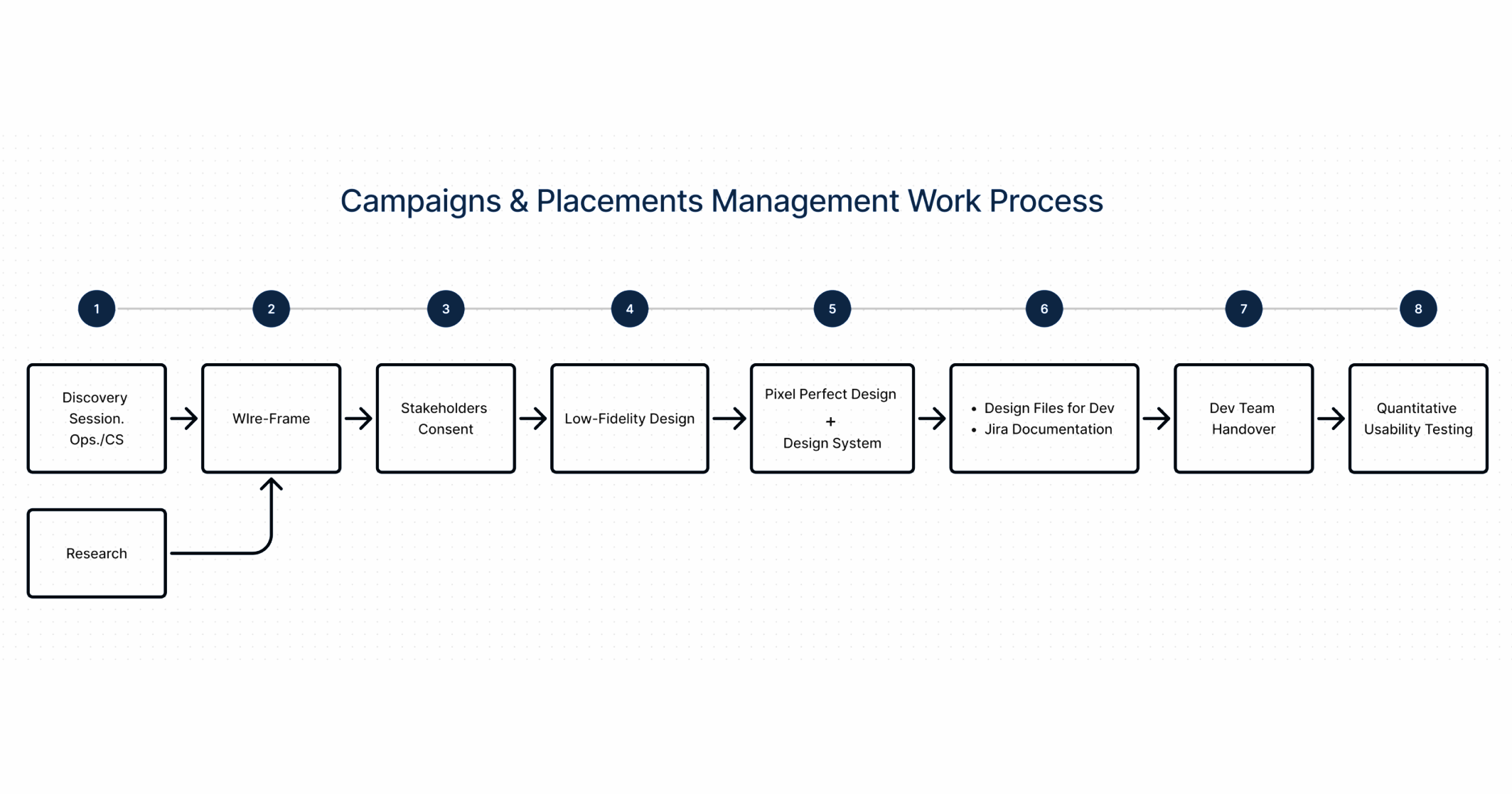
The Work Process
Research
Problem to solve
Campaign & placement management is the core operational hub for executing video monetization. Yet the existing section likely has too little research.
User interviews with cross‑functional teams
Interviewed 8 campaign managers across publishers and agency clients to identify discrepancies in how they define targets, dates, and segments.
Mapped synonyms and pain points (“placement” vs “campaigns”) to unify terminology and reduce errors.
Error & support ticket analysis
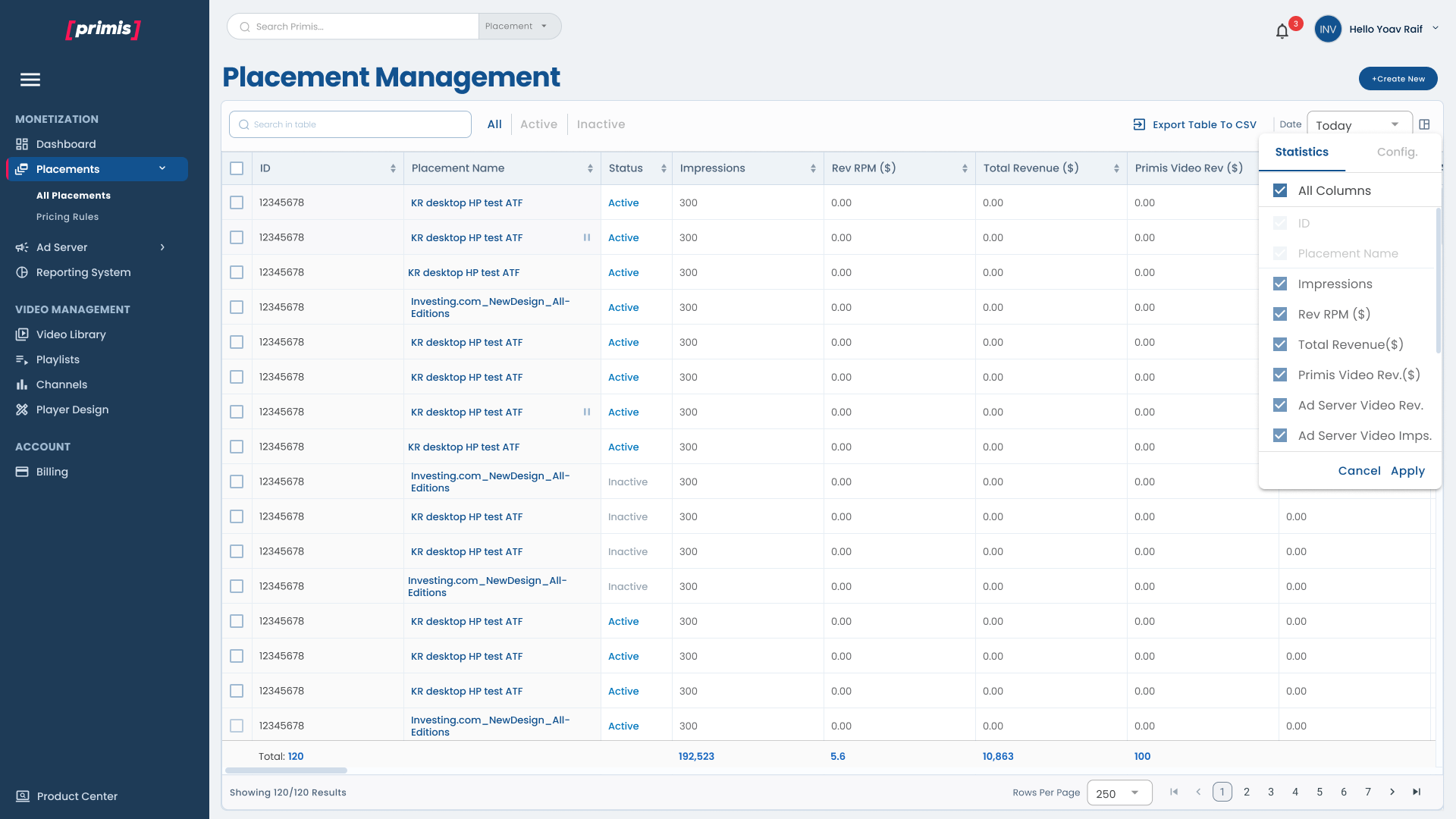
Analyzed support logs, finding that 60% of platform tickets sourced from Campaigns/Placements were about misunderstanding table filters, column options, and export behaviors.
Competitive auditing
Audited placement editors and bulk edit patterns in leading tools (e.g., GAM, PubMatic, Magnite) to see how they expose column customization, sorting, and bulk actions.
User journey mapping
Built day‑in‑the‑life journey maps for primary user personas, detailing when and why they return to campaign dashboards throughout a week.
Morning
-
Logs in to check status and changes from last time
-
Flags any major changes
-
Check dashboards for data changes
Midday
-
Talks to publishers and advertiser partners
-
Uses dashboard screenshots to justify decisions
-
Pulls quick reports for account execs
Afternoon
-
Runs tests on new segments or placements
-
Edits poor performers
-
Schedule changes for tomorrow
Insights
Users expect in‑context help and visual cues for complex actions like segmentation and bid attributes.
Bulk actions need predictable and recoverable states to prevent irreversible mistakes.
Solution
To support complex configuration workflows, I designed a system that improves clarity, reduces risk, and enables efficient management of campaigns and placements at scale.
The configuration experience was redesigned into a structured, modular form divided into logical sections that follow the natural workflow of an operations user.
Advanced UI patterns such as auto-completion and real-time validations were introduced to reduce friction, prevent errors, and increase confidence during complex configurations.
Material UI components were leveraged and extended (using suffixes, helper text, and hint text) to support clarity, scalability, consistency, and faster interaction across multiple use cases.
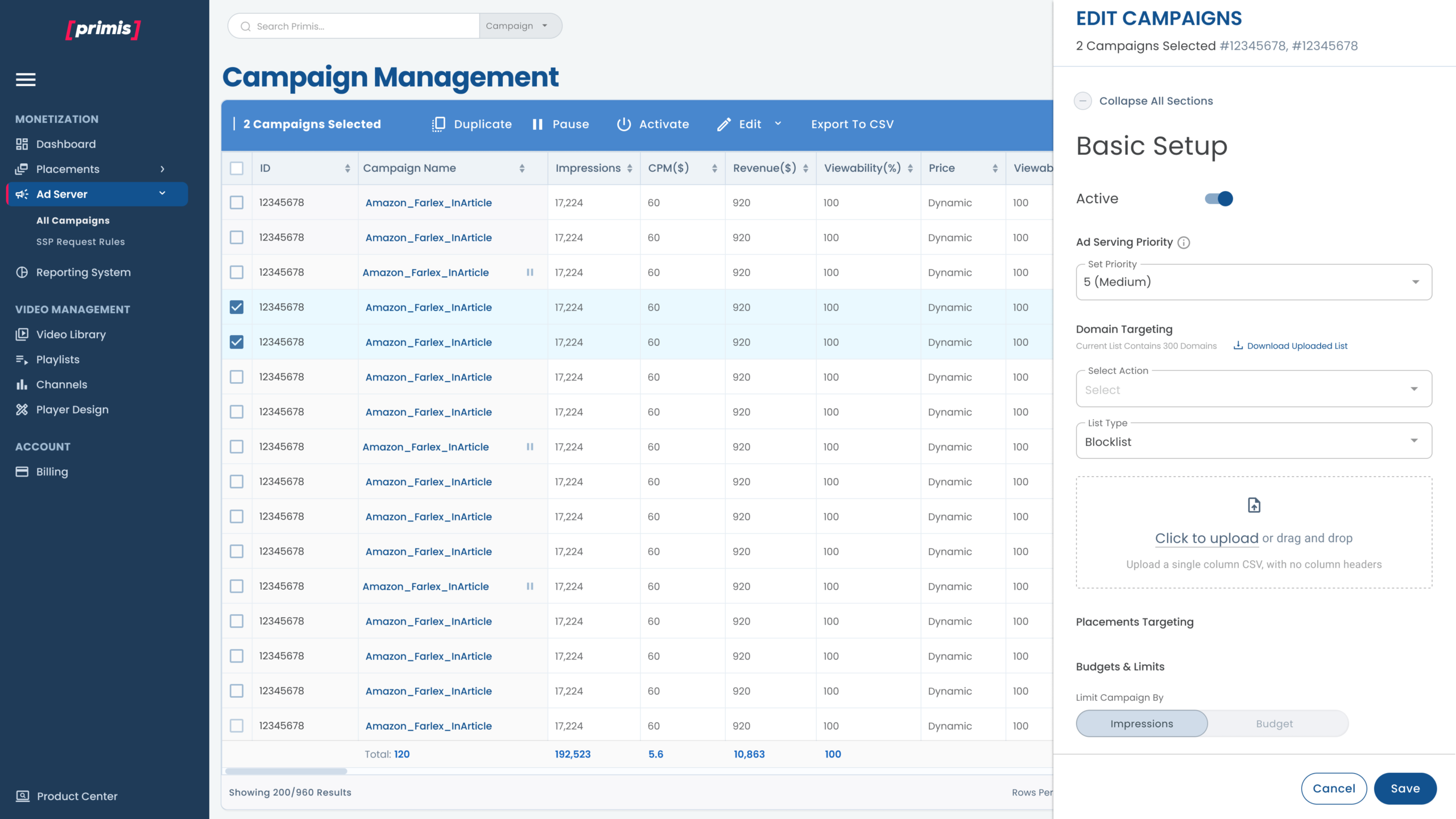
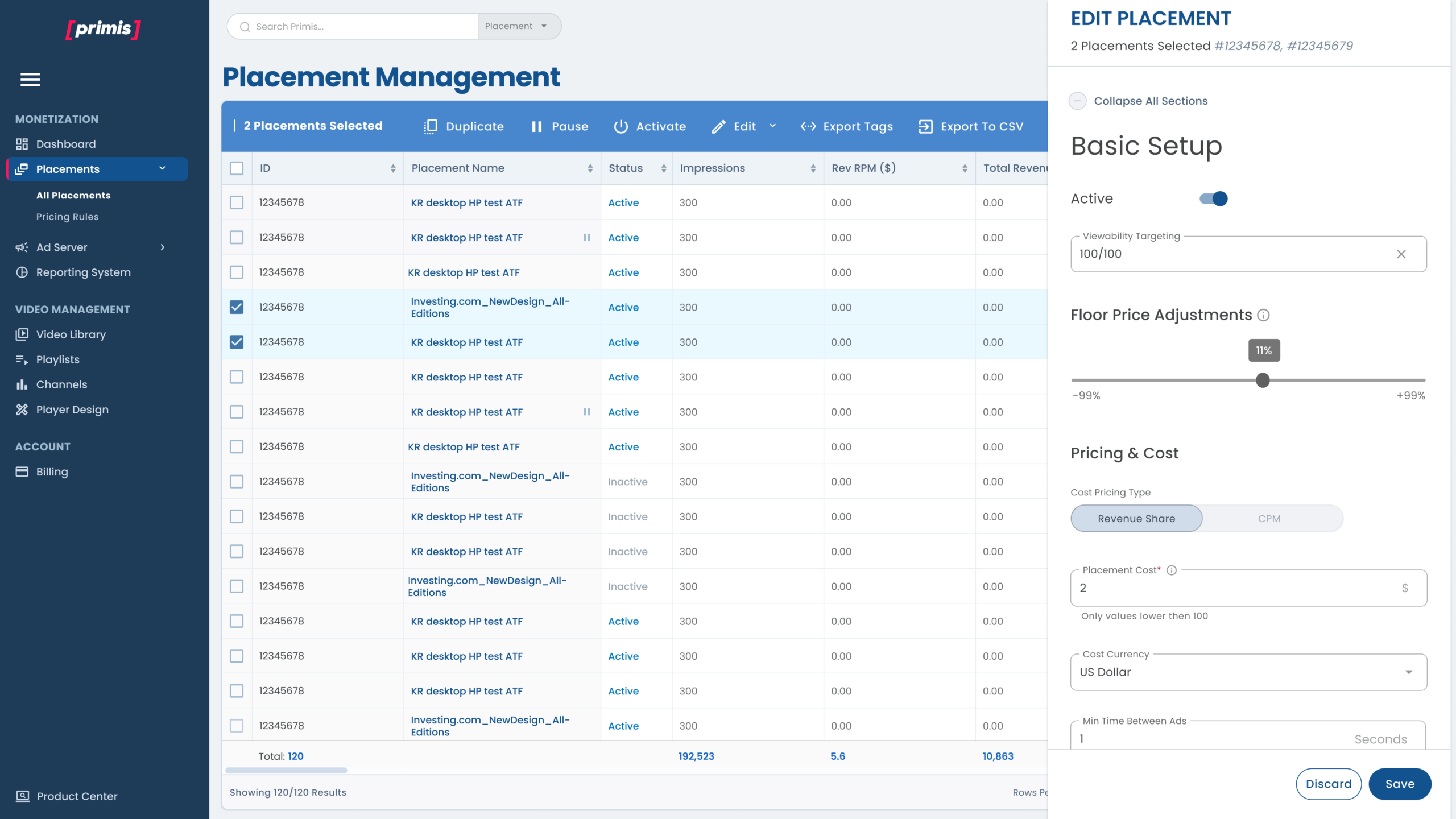
Bulk actions were redesigned with strong safeguards, including visibility into affected entities, confirmation layers, and contextual warnings to prevent unintended overrides of sensitive configurations like floor price, budgets and limits, ETC.
Special attention was given to risk-sensitive actions, ensuring that users clearly understand the impact of their changes before applying them.
Outcome
The redesign transformed a fragmented and high-risk system into a structured, scalable platform.
Users were able to configure campaigns faster, with fewer errors and greater confidence.
The system now supports complex, large-scale operations without compromising usability or control.
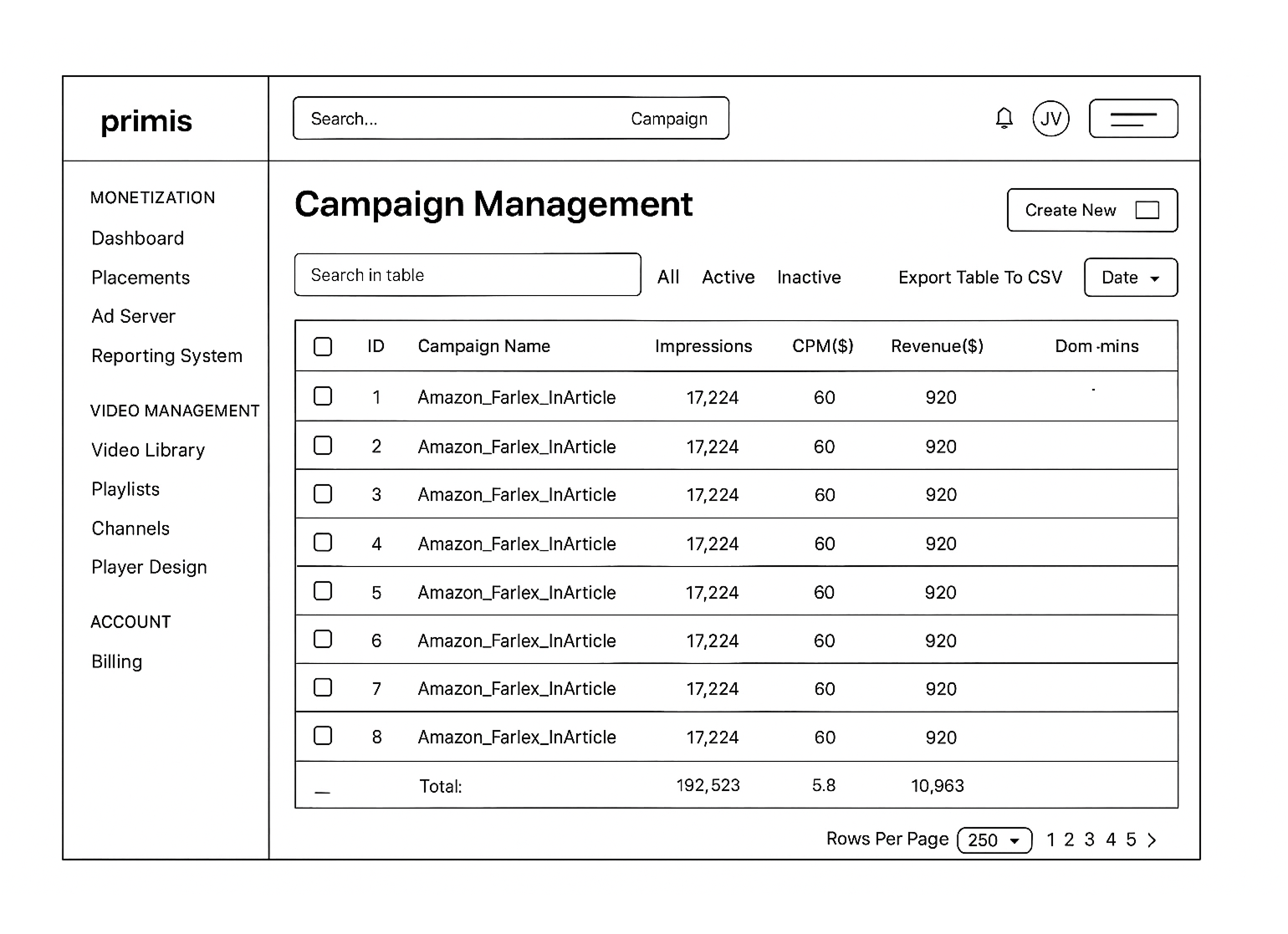
Ideation Wire-Frame
Final Campaign Management Table
Create Campaign Form Configurations
Configuring campaigns in an ad-tech environment is a high-risk, revenue-critical operation, where small misconfigurations can have significant financial impact. The goal of this form was not just to enable setup, but to create a system that reduces risk, enforces correctness, and supports confident decision-making at scale.
I designed a structured configuration experience that transforms a fragmented process into a controlled, predictable workflow. The form is organized into logical sections and sub-sections that mirror how operations teams think and execute – from foundational setup, through pricing and delivery logic, to targeting and advanced controls. This hierarchy reflects real configuration dependencies, allowing users to build campaigns progressively while maintaining context and minimizing cognitive overload.
To address the inherent complexity of ad-tech terminology and logic, I leveraged Material UI components as a base and extended them to carry more meaning. I introduced layered guidance patterns directly within the form, including placeholder text as inline hints, helper text for format examples and deeper explanations, and suffixes to clarify units, constraints, and business rules.
This approach surfaces critical information at the point of interaction, reducing reliance on external knowledge and closing gaps between system logic and user understanding.
From a risk mitigation perspective, the form enforces strict validation rules. Submission is blocked until all mandatory fields are completed, ensuring configuration integrity. When users attempt to submit incomplete data, the system automatically scrolls to the first missing required field, anchoring them directly to the source of the issue and enabling fast, focused correction.
Additional capabilities such as dynamic field behavior, auto-complete inputs, conditional field exposure, validation states, contextual feedback, and inline guidance helped users navigate complex dependencies more confidently, while preventing invalid or conflicting configurations before submission.
The outcome is a resilient configuration system that reduces operational risk, increases user confidence, and enables faster, more accurate campaign setup in a high-stakes environment.